Let's make

Let's make

your project

your project

flow!

flow!

Graphite Gaskets

Graphite gaskets offer excellent resistance to high temperatures, steam, and thermal fluids. They are widely utilized in demanding industrial applications where thermal stability and sealing reliability are essential.

Graphite gaskets offer excellent resistance to high temperatures, steam, and thermal fluids. They are widely utilized in demanding industrial applications where thermal stability and sealing reliability are essential.

Expanded Graphite Gasket - VAMECA

Temperature

-200°C to 650°C

Pressure

0 to 9400 psi

Typical Applications

Chemicals, acids, and corrosive fluids

Temperature

-200°C to 650°C

Pressure

0 to 9400 psi

Typical Applications

Chemicals, acids, and corrosive fluids

An Introduction to Graphite

Expanded graphite is one of the most widely used sealing materials for high-temperature applications in industrial sectors. It combines excellent thermal resistance, good chemical compatibility, and high adaptability to flange surface irregularities.

Thanks to its compressible structure, graphite ensures a reliable seal even under severe conditions of temperature, pressure, and repeated thermal cycling. It is highly valued in steam networks, thermal oil systems, refineries, and petrochemical plants.

Graphite gaskets are available in various configurations, including pure expanded graphite or reinforced with stainless steel inserts, to meet the mechanical performance and safety requirements of industrial installations.

Expanded graphite is one of the most widely used sealing materials for high-temperature applications in industrial sectors. It combines excellent thermal resistance, good chemical compatibility, and high adaptability to flange surface irregularities.

Thanks to its compressible structure, graphite ensures a reliable seal even under severe conditions of temperature, pressure, and repeated thermal cycling. It is highly valued in steam networks, thermal oil systems, refineries, and petrochemical plants.

Graphite gaskets are available in various configurations, including pure expanded graphite or reinforced with stainless steel inserts, to meet the mechanical performance and safety requirements of industrial installations.

Key Benefits

Excellent resistance to high temperatures

Excellent resistance to steam and thermal oils

Excellent chemical resistance compatible with a wide range of industrial process fluids

Excellent compressibility and recovery

Engineered for severe thermal cycling

Sample Materials

LATTYGRAF EFA

LATTYGRAF EFA

Expanded graphite sheet reinforced with a stainless steel tanged insert engineered to optimize graphite mechanical bonding without the use of adhesives. This mechanically clinched design ensures the finished gasket retains the intrinsic performance properties of flexible graphite.

Expanded graphite sheet reinforced with a stainless steel tanged insert engineered to optimize graphite mechanical bonding without the use of adhesives. This mechanically clinched design ensures the finished gasket retains the intrinsic performance properties of flexible graphite.

Temperature Rating

Temperature Rating

-200°C to 650°C

-200°C to 650°C

Pressure

Pressure

0 to 9400 psi

0 to 9400 psi

Colour

Colour

Black

Black

pH

pH

0 - 14

0 - 14

Regulatory Compliance

Regulatory Compliance

BAM (certified for oxygen service) / WRAS (certified for potable water)

BAM (certified for oxygen service) / WRAS (certified for potable water)

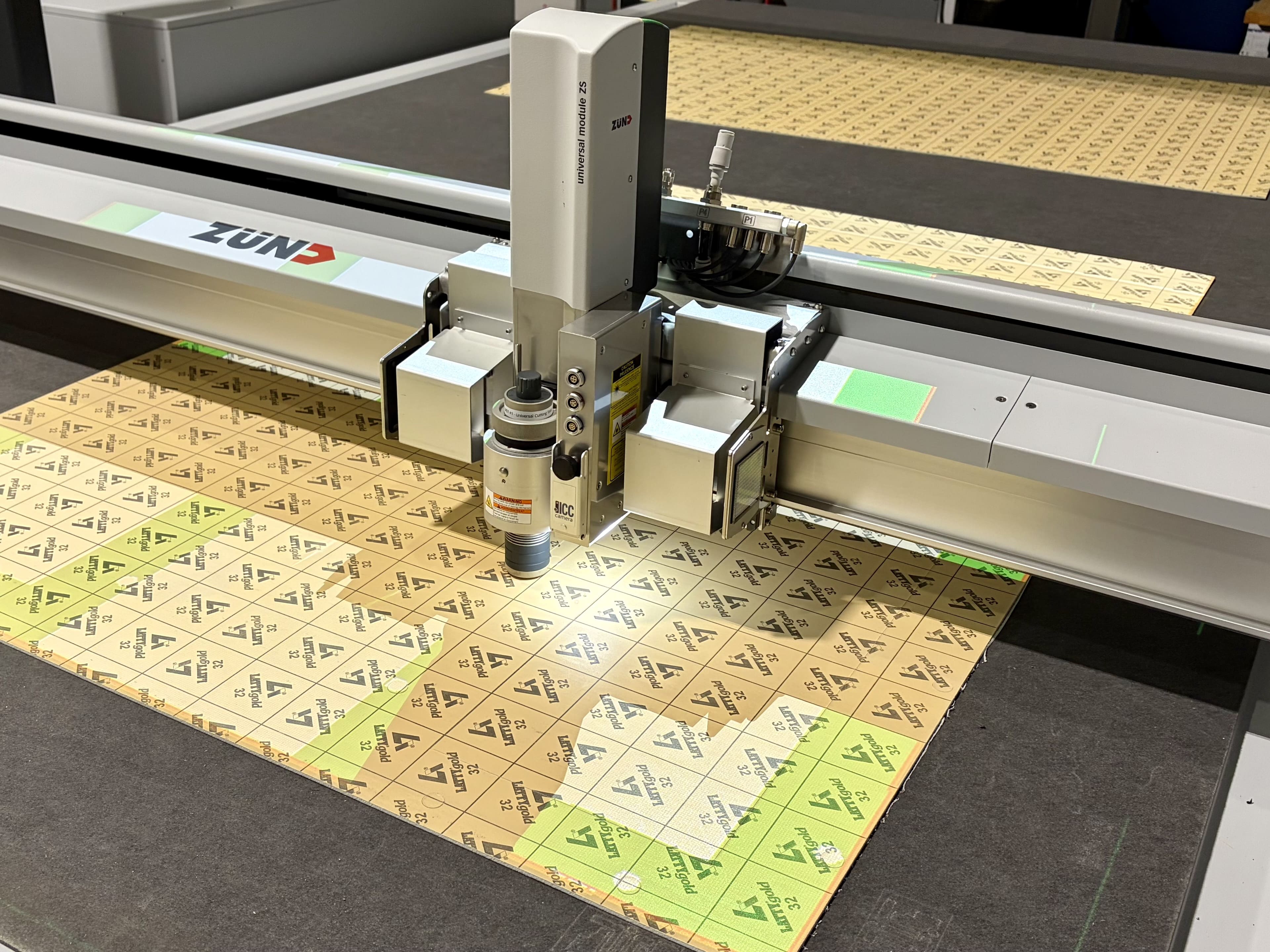
Zünd CNC cutting table for industrial gasket manufacturing

Contact our experts to select the optimal sealing material for your specific application

Contact our experts to select the optimal sealing material for your specific application

Graphite Chemical Compatibility Chart

Search for a fluid or filter by family to verify the resistance of a Graphite gasket and its maximum operating temperature.
Final validation depends on the actual process; contact us for personalized technical advice.

Search for a fluid or filter by family to verify the resistance of a Graphite gasket and its maximum operating temperature.
Final validation depends on the actual process; contact us for personalized technical advice.

36 fluides affichés
FluideConditionGraphiteRepère T°Point de vigilance réel
Vapeur saturée
H₂O
Service vapeurExcellente~450 °C*Un des meilleurs usages du graphite : bonne tenue thermique et faible relaxation. Valider pression, bride et qualité du graphite.
Vapeur surchauffée
H₂O
Haute températureBonneÀ valider / ValidateTrès adapté mécaniquement. En présence d’air/oxygène à très haute température, vérifier risque d’oxydation du graphite.
Condensat
H₂O
Retour vapeurExcellente~250 °C*Très bon choix. Vérifier corrosion des brides/boulonnerie si condensat acide ou contaminé.
Eau chaude
H₂O
Boucle industrielleExcellente~200 °C*Compatible. Le graphite est souvent surdimensionné chimiquement, mais intéressant si température/serrage élevés.
Eau de mer
Mélange salin / Saline blend
Aqueux salinBonne~150 °C*Graphite compatible, mais surveiller corrosion galvanique et métaux en contact.
Huile thermique
Mélange / Blend
Fluide caloporteurExcellente~400 °C*Excellent choix courant pour température, cycles et serrage. Vérifier compatibilité du grade avec l’huile réelle.
Bitume
Mélange / Blend
ChaudExcellente~350 °C*Souvent plus pertinent que PTFE/élastomères à chaud. Attention au colmatage, serrage et nettoyage.
Huile minérale
Mélange / Blend
LubrificationExcellente~350 °C*Très bonne compatibilité. Valider pression et finition des brides.
Diesel / mazout
Mélange / Blend
CarburantExcellente~250 °C*Très bon comportement. Vérifier additifs et exigences incendie/ATEX.
Essence
Mélange / Blend
CarburantBonne~150 °C*Compatible chimiquement. Valider émission/fuite, pression vapeur et exigences sécurité.
Gaz naturel
CH₄
GazExcellente~300 °C*Bon choix pour haute température/pression. Vérifier taux de fuite requis et norme gaz.
Propane / butane
C₃H₈ / C₄H₁₀
GPLExcellente~200 °C*Compatible. Valider pression, basse température éventuelle et réglementation gaz.
Acide chlorhydrique
HCl
AqueuxBonneÀ valider / ValidateGraphite souvent compatible chimiquement. Sur acides, valider surtout concentration, température et parties métalliques.
Acide sulfurique
H₂SO₄
Dilué / modéréÀ validerÀ valider / ValidatePossible selon concentration/température. Concentré et oxydant à chaud : risque d’attaque du graphite.
Acide nitrique
HNO₃
OxydantNon recommandéAcide oxydant : à éviter surtout concentré ou chaud. Préférer validation fabricant ou autre matière.
Acide phosphorique
H₃PO₄
SolutionBonneÀ valider / ValidateGénéralement acceptable, mais valider concentration/température et corrosion des métaux.
Soude caustique
NaOH
Solution aqueuseBonneÀ valider / ValidateBonne compatibilité générale. À très forte concentration/température, valider grade et bride.
Potasse caustique
KOH
Solution aqueuseBonneÀ valider / ValidateSouvent compatible. Valider concentration/température et parties métalliques.
Ammoniaque
NH₃
Gaz / solutionBonneÀ valider / ValidateCompatible dans beaucoup de cas. Valider pression, température et métaux.
Métaux alcalins fondus
Na, K
FonduNon recommandéException connue : ne pas utiliser le graphite avec sodium/potassium fondus.
Toluène
C₇H₈
AromatiqueExcellente~200 °C*Très bonne résistance chimique. Vérifier émissions, pression vapeur et taux de fuite.
Xylène
C₈H₁₀
AromatiqueExcellente~200 °C*Très bonne compatibilité. Valider conditions vapeur/pression.
Acétone
C₃H₆O
CétoneBonne~100 °C*Compatible généralement. Vérifier volatilité, perméation de l’assemblage et sécurité.
Éthanol
C₂H₅OH
AlcoolBonne~120 °C*Compatible. En alimentaire/pharma, valider grade matière et exigences de propreté.
Solvants chlorés
CH₂Cl₂ / C₂HCl₃
Dichlorométhane / TCEBonneÀ valider / ValidateGraphite généralement résistant, mais valider volatilité, HSE et compatibilité des métaux.
Chlore sec
Cl₂
Gaz secÀ validerÀ valider / ValidatePossible selon grade et température. Service dangereux : validation fabricant obligatoire.
Chlore humide
Cl₂ + H₂O
Gaz humideNon recommandéMilieu oxydant/corrosif. Risque sur graphite et métaux : ne pas présélectionner sans validation.
Oxygène
O₂
GazÀ validerÀ valider / ValidateService oxygène : compatibilité, propreté, lubrifiants et procédure doivent être validés. Attention température.
Peroxyde d’hydrogène
H₂O₂
OxydantÀ validerÀ valider / ValidateOxydant fort selon concentration. Validation obligatoire, souvent à éviter avec graphite standard.
Permanganate
MnO₄⁻
Solution oxydanteNon recommandéOxydant fort cité parmi les exceptions. Ne pas recommander.
Persulfates / nitrates
S₂O₈²⁻ / NO₃⁻
Sels oxydantsNon recommandéSels fortement oxydants : risque d’attaque du graphite. À exclure sans validation dédiée.
Air comprimé
Air
Sec / humideBonneÀ valider / ValidateCompatible aux températures modérées. À très haute température, l’air peut oxyder le graphite.
Azote
N₂
Gaz inerteExcellente~450 °C*Excellent choix. Valider seulement pression, taux de fuite et finition des brides.
Hydrogène
H₂
GazBonneÀ valider / ValidateCompatible chimiquement, mais fuite/perméation et sécurité sont critiques selon pression.
Dioxyde de carbone
CO₂
Gaz / liquideExcellente~250 °C*Compatible. Valider basse température si détente ou CO₂ liquide.
Sulfure d’hydrogène
H₂S
Sec / humideBonneÀ valider / ValidateGraphite compatible. Valider surtout exigences NACE/sour service pour les métaux.
ExcellenteBonneÀ validerNon recommandé* Repère indicatif pour joints graphite expansé / graphite renforcé. Le graphite est très résistant à la vapeur, aux hydrocarbures, aux huiles, à de nombreux solvants, acides et bases. Ses limites principales sont les milieux fortement oxydants, certains acides minéraux concentrés oxydants, les sels oxydants, les métaux alcalins fondus et l’oxydation à très haute température en présence d’air.

Can't find your process fluid?

Our specialists can validate chemical compatibility, pressure and temperature ratings, and recommend the appropriate sealing material.

Can't find your process fluid?

Our specialists can validate chemical compatibility, pressure and temperature ratings, and recommend the appropriate sealing material.

Custom Recommendation

Why Industrial Operators Choose VAMECA

Selecting a flange gasket based solely on its dimensions is often the root cause of premature failures and costly operational downtime due to leaks.

Temperature, pressure, media, the condition of the ANSI/ASME flanges, and operational stresses must all be evaluated to ensure durable process piping sealing and to minimize industrial maintenance interventions.

Whether you require flat flange gaskets, spiral wound gaskets, or custom-engineered geometries, our sealing solutions integrate seamlessly into your preventive and corrective industrial maintenance programs.

Custom-Cut Industrial Gaskets by VAMECA

Customized analysis

Assessment of your constraints and operating environment

Customized analysis

Assessment of your constraints and operating environment

Customized analysis

Assessment of your constraints and operating environment

Optimal solution

Materials, sizes, and recommended configuration for your application

Optimal solution

Materials, sizes, and recommended configuration for your application

Optimal solution

Materials, sizes, and recommended configuration for your application

Rapid Response

We deliver tailored solutions within 24 hours.

Rapid Response

We deliver tailored solutions within 24 hours.

Rapid Response

We deliver tailored solutions within 24 hours.

Zünd CNC cutting table for industrial gasket manufacturing

OUR TECHNOLOGY

High-Precision CNC Gasket Cutting

Equipped with cutting tables from the Swiss manufacturer Zünd, we fabricate custom gaskets with exceptional precision from your drawings, digital files, or existing samples.

Equipped with cutting tables from the Swiss manufacturer Zünd, we fabricate custom gaskets with exceptional precision from your drawings, digital files, or existing samples.

Cutting Surface
6’ x 12’
1.8 x 3.2 m

Precision of ± 0.1 mm

Custom prototypes / Medium & large-volume production

Replication from drawings, photographs, or digital files

COMMON APPLICATIONS

Typical Applications for Graphite Sealing Solutions

Graphite gaskets offer excellent resistance to high temperatures and severe thermal cycling, making them a benchmark solution for steam, power-generation, and petrochemical facilities.

Steam Utility Systems

Saturated and superheated steam lines

Steam Manifolds

Boiler flanges

Thermal Power Plants

Thermal Oil & Power

Thermal Oil Systems

Heat Exchangers

Thermal Fluid Boilers

Energy recovery facilities

Petrochemicals & Industrial Processes

Hydrocarbons

Refineries

High-Temperature Chemical Processing

Process Fluid Piping Systems

Flange Gaskets and Sealing Solutions for ANSI/ASME Standards - VAMECA

Flange gaskets compliant with ANSI, ASME, and EN standards

Flange gaskets compliant with ANSI, ASME, and EN standards

Flange gaskets compliant with ANSI, ASME, and EN standards

VAMECA manufactures flat and spiral wound flange gaskets for industrial steam, chemical, water, gas, and thermal oil piping systems. Our gaskets are cut to standard dimensions in compliance with ASME B16.21, ASME B16.20, and EN 1514 for ANSI Class 150, 300, and 600 flanges, as well as European PN industrial flanges.

Available in PTFE, graphite, aramid, rubber, and high-performance materials, our gaskets deliver reliable sealing for industrial piping, valves, pumps, heat exchangers, and pressure vessels.

VAMECA manufactures flat and spiral wound flange gaskets for industrial steam, chemical, water, gas, and thermal oil piping systems. Our gaskets are cut to standard dimensions in compliance with ASME B16.21, ASME B16.20, and EN 1514 for ANSI Class 150, 300, and 600 flanges, as well as European PN industrial flanges.

Available in PTFE, graphite, aramid, rubber, and high-performance materials, our gaskets deliver reliable sealing for industrial piping, valves, pumps, heat exchangers, and pressure vessels.

FAQ

Before saying yes, ask all your questions.

Find here the answers to your most common questions about our products and services.

What are the temperature limits of a graphite gasket?

Is graphite suitable for steam applications?

What is the difference between a graphite gasket and a PTFE gasket?

Is graphite compatible with thermal fluids?

Are you able to manufacture custom graphite gaskets?

Are you able to reverse-engineer and replicate an existing seal?

Are the graphite gaskets reinforced?

Can a graphite gasket be used on ANSI and ASME flanges?

Can you manufacture a custom seal based on a photo?

Do you offer Canada-wide delivery for your industrial graphite seals?