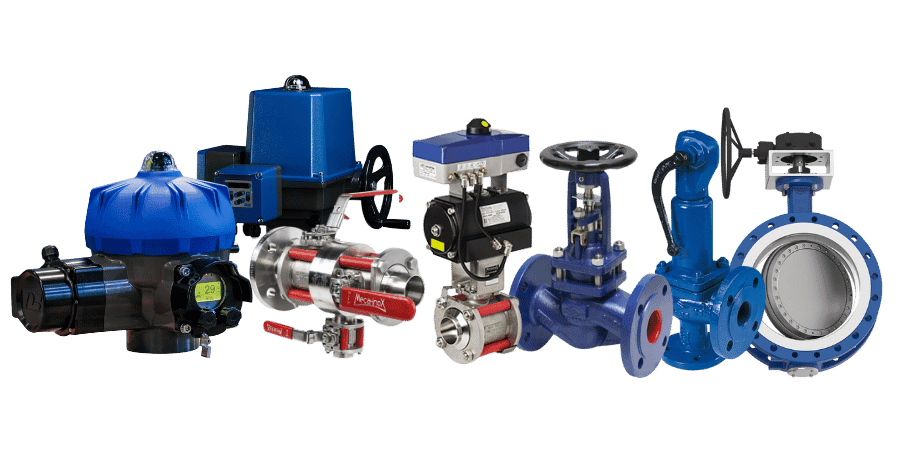
VAMECA offers a comprehensive range of industrial valves, including ball valves, butterfly valves, knife gate valves, check valves, control valves, safety valves, as well as manual, electric, and pneumatic actuation solutions.
VAMECA supports industrial operators in selecting, sourcing, and replacing industrial valves for their facilities in Quebec and across Canada.
Whether you require a ball valve, butterfly valve, knife gate valve, check valve, control valve, or safety relief valve, our objective is straightforward: analyze your application, identify the precise technical solution, and promptly deliver a reliable valve engineered for your specific pressure, temperature, fluid, connection, and environmental parameters.
We provide rapid assistance for urgent maintenance requirements, new capital projects, standard equipment replacements, and specialized applications requiring dedicated technical support.
Ball Valves
Ball valves are used for the rapid isolation of a wide range of industrial fluids. They are highly valued for their simplicity, low pressure drop, and reliable sealing in the closed position.
They are available in 2-piece, 3-piece, ASME or EN flanged configurations, with bodies in carbon steel, stainless steel, brass, or specialty alloys to match your specific application. They are widely utilized for water, compressed air, oils, select chemical media, low-pressure steam, and general utility services.
Double and triple offset butterfly valves
Double-offset and triple-offset butterfly valves are used when applications require higher pressure, temperature, or tight shut-off capabilities than a standard resilient-seated butterfly valve can provide.
They are highly suitable for steam, thermal oil, gas, high-temperature processes, demanding industrial networks, or services where a more robust design is required. Depending on the project specifications, they can be configured with metal seats, carbon steel or stainless steel bodies, ASME or EN flanges, and manual, electric, or pneumatic actuation.
Diaphragm Valves
Diaphragm valves are utilized when the media must be isolated from the operating mechanism, or when the application demands excellent chemical compatibility. They are commonly used in chemical processes, utilities, corrosive fluids, treated water, sanitary applications, or installations requiring a simple, reliable design.
Key selection criteria include body and diaphragm materials, optional lining, temperature, pressure, and compatibility with the fluid.
Sampling Valves
Sampling valves allow for the extraction of a controlled volume of fluid directly from a process line, vessel, or industrial system. They are designed for applications where sampling must be cleaner, more repeatable, and more precisely controlled than what is achievable with a standard isolation valve.
These valves can be tailored to chemical, pharmaceutical, food, corrosive, or demanding environments, with a complete range of materials, linings, specific sampling volumes, and configurations engineered to match your process requirements.
Gate valves
Gate valves are primarily designed for isolation purposes, operating in either a fully open or fully closed position. They are ideally suited for applications requiring minimal pressure drop when fully open, particularly within networks carrying water, steam, oil, gas, or industrial utility services.
These valves are available in carbon steel, stainless steel, cast iron, or other specialty materials, with flanged, weld, or threaded end connections according to project-specific standards.
Globe Valve
Globe valves are utilized for the isolation, throttling, or regulation of flow in numerous industrial applications. Their design provides superior control over fluid passage compared to standard on-off valves.
They are particularly well-suited for steam, condensate, hot water, thermal oil, industrial utilities, and specific processes demanding more progressive flow control.
Industrial Strainers & Filters
Industrial strainers and filters protect downstream equipment by capturing particulate matter suspended in the fluid. They are typically installed upstream of control valves, steam traps, pumps, heat exchangers, instrumentation, or other sensitive process equipment.
Depending on the application, configurations include Y-strainers, basket strainers, or other designs tailored to the specific fluid, line size, pressure rating, temperature, and required micron rating.
Steam Traps
Steam traps ensure the efficient discharge of condensate while minimizing live steam loss. They are critical to the performance, safety, and energy efficiency of steam networks.
Selecting the right steam trap depends on the installation type, condensate load, differential pressure, startup behavior, the presence of air, and the required level of reliability. VAMECA can help identify the optimal steam trap configuration for your specific application.
Self-Operated Pressure Regulators and Control Valves
Self-operated pressure reducing valves and regulators allow for the reduction and stabilization of downstream pressure without the need for complex control systems. They are utilized in steam, hot water, gas, compressed air, or industrial utility networks where pressure must be reliably decreased.
VAMECA is positioned to support projects involving ARI solutions for steam, thermal networks, and industrial applications requiring precise pressure management.
Knife Gate Valves
Knife gate valves are exceptionally well-suited for slurry-laden media, sludges, pastes, powders, effluents, or applications where a conventional valve is prone to rapid clogging. They are widely utilized in pulp and paper, water and wastewater treatment, mining, specific chemical applications, and industrial processes involving suspended solids.
These valves can be custom-configured with various options for body materials, gates, seats, and glands to match the specific media, pressure ratings, and operating conditions of your process.
Butterfly Valves
Butterfly valves provide a compact, cost-effective solution for isolation or simple throttling service across many industrial networks. They are frequently selected for large-diameter lines, water distribution, cooling water loops, utility services, specific food processing systems, or applications with strict face-to-face space constraints.
Depending on your application requirements, they can be configured in wafer, lug, or flanged designs, featuring EPDM, NBR, PTFE, or other specialty seat materials, and equipped with manual, pneumatic, or electric actuation.
Check Valve
Check valves prevent backflow in piping systems, protecting pumps, process equipment, and network piping installations from unwanted fluid reversal.
Depending on your application, we offer swing check valves, dual-plate check valves, spring-loaded check valves, silent check valves, ball check valves, or custom-engineered models tailored for water, steam, utility, or industrial process networks.
Control Valves
Control valves are utilized when flow, pressure, temperature, or liquid level must be regulated with greater precision than can be achieved using a standard isolation valve.
They are commonly deployed in steam networks, heat exchangers, hot water systems, thermal processes, industrial utilities, and automated systems. Proper selection depends on the process media, upstream and downstream conditions, required Cv or Kv, the actuator, the positioner, and the expected process response.
Safety Relief Valves
Safety valves protect installations against overpressure. They are essential for a wide range of pressure equipment, including boilers, vessels, heat exchangers, and steam, gas, compressed air, or liquid circuits.
Selecting the right valve depends on numerous parameters: set pressure, discharge capacity, media, temperature, connection type, applicable standards, and local regulations. VAMECA can help you define your requirements and identify the optimal solution.
Valve Actuation and Automation
An industrial valve can be operated manually, electrically, or pneumatically. Actuator selection must be based on the required torque, valve type, duty cycle, operating environment, available voltage, position feedback requirements, and the desired level of automation.
We assist industrial operators in selecting the optimal electric or pneumatic actuators to automate existing valves, or we can provide complete, application-specific valve and actuator assemblies.
Industrial Flanges and Piping Accessories
Industrial flanges provide the mechanical connection between valves, piping, equipment, and pipeline accessories. They are essential to ensuring a demountable, aligned assembly that is fully compatible with the system's pressure ratings.
VAMECA supports your flange requirements across various standards and configurations: welding neck, slip-on, threaded, socket weld, blind, lap joint, or custom flanges engineered to your specific project needs.
Selecting the right flange depends on nominal diameter, pressure class, material, facing type, drilling pattern, process fluid, operating temperature, and compatibility with the specified gaskets.
Rupture Discs
Rupture discs are safety devices designed to protect equipment, vessels, process lines, and pressurized systems against uncontrolled overpressure or vacuum conditions.
Unlike a safety relief valve, a rupture disc is a non-reclosing device: it bursts at a predetermined pressure to rapidly relieve pressure and safeguard the system. It can be used independently or in combination with a safety relief valve, depending on the level of protection required.
Selecting the appropriate rupture disc depends on the burst pressure, temperature, process media, material compatibility, mounting configuration, operating conditions, and specific process safety requirements.
VAMECA partners with industrial operators facing critical challenges, including production downtime, discontinued valves, tight lead times, specialized technical documentation requirements, material compatibility verification, and the need to replace existing valves or source more reliable alternatives.
We provide engineered solutions for applications such as:
Steam and condensate
Thermal oil
Industrial water
Compressed air
Industrial gases
Chemical products
Food-grade fluids
Effluents and wastewater
Slurries, pastes, and viscous fluids
Heating networks and industrial utilities
Each application demands specific technical specifications. A valve designed for steam service requires an entirely different selection process than one installed on thermal oil, aggressive chemicals, or media carrying suspended solids.
Many steam requirements cannot be solved with an isolated valve, but rather with an engineered package. This is a segment of our offering that few distributors are equipped to handle.
Collaborating with ARI Armaturen, we can supply complete stations rather than individual components for self-integration:
Steam Conditioning Stations u2014 combined desuperheating and pressure reduction to deliver steam precisely at process conditions.
Pressure Reducing Stations (PREsys) u2014 controlled pressure reduction across the steam network.
Condensate Manifolds and Stations (CONAsys) u2014 optimized condensate drainage.
For these systems, Canadian compliance (CRN, CSA B51) applies to the entire assembly: we validate all sourcing accordingly to ensure full conformity.
This is the critical element that most suppliers overlook — and one of the primary reasons why steam projects derail in Canada.
A pressure-retaining component destined for a Canadian system must typically be registered with a CRN (Canadian Registration Number) under the CSA B51 standard, administered at the provincial level (in Quebec, under the authority of the RBQ). However, a European-certified catalog product with PED certification is not automatically eligible for registration in Canada. Selecting a valve solely based on its technical specifications, without addressing CRN compliance, exposes you to a compliance rejection at the end of the project.
Our role is to navigate this gap: we evaluate CRN feasibility by manufacturer and product line, guide you to the correct supply chain channel (including ARI in North America when that is the viable path), and structure the required documentation based on the province and specific service conditions. CRN availability must be validated on a case-by-case basis — we tell you what is realistic, not just what makes a sale.
Depending on your project requirements, we can supply industrial valves in a wide range of materials and configurations:
Carbon steel
304, 316, or 316L stainless steel
Cast iron or ductile iron
Bronze, brass, or specialty alloys
EPDM, NBR, PTFE, metal-to-metal, or specialty seats
ASME Class 150, 300, or higher flanges as required
EN PN10, PN16, PN25, or PN40 flanges
Threaded, socket weld, butt weld, wafer, lug, or flanged connections
Lever, handwheel, gear-operated, electric actuator, or pneumatic actuator control
For specific regulatory and quality compliance—including CRN (Canadian Registration Numbers), material test reports (MTRs), certificates of conformance, pressure testing, or custom quality documentation—we verify all engineering possibilities based on the manufacturer, the product, and your province of operation.
VAMECA supports Canadian industrial operations with a technical, local, and responsive approach. Our value lies not only in the product, but in our capability to rapidly analyze your requirements and guide you toward a viable solution.
We can assist you when facing:
A valve replacement with no clear reference
An urgent maintenance demand
A steam, thermal oil, or industrial fluid application
A requirement for technical documentation
An existing valve that needs identification
A search for equivalent specifications
Lead time issues with an existing brand
A project requiring multiple valve families
An actuated valve requirement
Strict material, pressure, or temperature constraints
Our role is to bridge the gap between field requirements, technical specifications, and manufacturers capable of delivering the optimal solution.
Industrial projects rarely progress under perfect conditions. Sometimes a part number, a photo, a nameplate, or a technical data sheet is missing. It is precisely in these situations that VAMECA can assist you.
Send us your available information: valve photos, dimensions, diameter, pressure, fluid, temperature, connection type, existing brand, or operating conditions. Even with partial data, we can often begin identifying a solution or guide you on the specific details required to move forward successfully.
VAMECA supports plants, contractors, maintenance teams, engineers, and industrial buyers across Quebec and Eastern Canada.
Before saying yes, ask all your questions.
Find here the answers to your most common questions about our products and services.