Gasoline
Mélange / Blend · Fuel
Practical caution point : Very good FKM choice. Validate additives, aromatics, bioethanol and hazardous-area requirements.
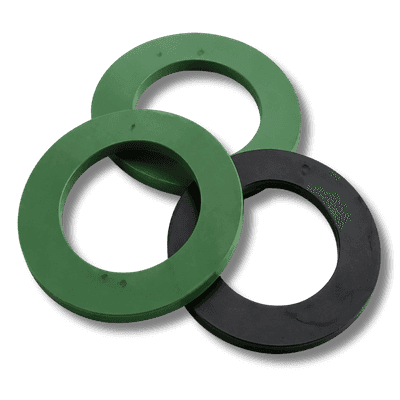
Excellent resistance to oils and hydrocarbons
Wide operating temperature range
Excellent chemical resistance
Excellent resistance to aging and ozone
Excellent resistance to compression set
FKM FLUOROELASTOMER

| Fluid | Condition | FKM | Practical caution point |
|---|---|---|---|
Gasoline Mélange / Blend | Fuel | Excellent | Very good FKM choice. Validate additives, aromatics, bioethanol and hazardous-area requirements. |
Diesel fuel Mélange / Blend | Fuel | Excellent | Very good behavior. Check biodiesel/FAME content and actual temperature. |
Kerosene Mélange / Blend | Fuel | Excellent | Compatible in common uses. Check additives and pressure. |
Mineral oil Mélange / Blend | Lubrication | Excellent | Classic FKM application. Good choice for hot petroleum oils. |
Mineral hydraulic oil Mélange / Blend | ISO VG / HLP | Excellent | Very good choice. Validate anti-wear additives and temperature. |
Thermal oil Mélange / Blend | Heat-transfer fluid | Good | Possible depending on formulation and temperature. Graphite is often preferred on very hot flanges. |
Bitumen Mélange / Blend | Hot | Validate | Validate: temperature, cleaning, fouling and gasket compression often dominate. |
Natural gas CH₄ | Gas | Excellent | Compatible. Validate permeation, leak rate, pressure and gas standards. |
Propane C₃H₈ | Gas/liquid | Excellent | Common good choice. Validate low temperature during expansion. |
Butane C₄H₁₀ | Gas/liquid | Excellent | Compatible. Validate pressure/temperature and gas regulations. |
Toluene C₇H₈ | Aromatic | Excellent | FKM is generally very suitable for aromatics. Check swelling depending on grade. |
Xylene C₈H₁₀ | Aromatic | Excellent | Very good typical behavior. Validate temperature and emissions. |
Benzene C₆H₆ | Aromatic | Excellent | Chemically compatible, but HSE-critical service. |
Naphtha Mélange / Blend | Light hydrocarbons | Excellent | Common good choice. Validate actual blend composition. |
Chlorinated solvents — | General family | Good | Often compatible with FKM, but validate the specific solvent and temperature. |
Dichloromethane CH₂Cl₂ | Chlorinated | Validate | Validate: volatility and swelling possible depending on grade and temperature. |
Trichloroethylene C₂HCl₃ | Chlorinated | Good | Generally acceptable. Validate continuous exposure and temperature. |
Acetone C₃H₆O | Ketone | Not recommended | Poor choice for FKM: ketones are generally incompatible. Prefer EPDM/PTFE depending on design. |
MEK C₄H₈O | Ketone | Not recommended | Avoid with FKM. Swelling/degradation possible. |
MIBK C₆H₁₂O | Ketone | Not recommended | Not recommended for FKM; choose another elastomer or PTFE. |
Diethyl ether C₄H₁₀O | Ether | Not recommended | Ethers are generally unfavorable to FKM. Mandatory validation. |
THF C₄H₈O | Cyclic ether | Not recommended | Poor candidate for FKM; swelling is often problematic. |
Ethyl acetate C₄H₈O₂ | Ester | Validate | Esters are often unfavorable. Validate against material data; EPDM/PTFE may be better. |
Methanol CH₃OH | Alcohol | Validate | FKM may be limited with low molecular weight alcohols; validate concentration/temperature. |
Ethanol C₂H₅OH | Alcohol | Validate | Validate, especially with fuel blends and continuous exposure. |
Isopropanol C₃H₈O | Alcohol | Good | Often acceptable with moderate exposure. Validate temperature and duration. |
Ethylene glycol C₂H₆O₂ | Water/glycol | Good | Generally acceptable. EPDM is often more natural for water/glycol. |
Propylene glycol C₃H₈O₂ | Water/glycol | Good | Possible depending on formulation. Check inhibitors and temperature. |
Cold water H₂O | Potable/industrial | Good | Acceptable cold. EPDM is often more suitable for potable/general water. |
Hot water H₂O | Hot loop | Validate | Standard FKM is often limited in hot water. Prefer EPDM depending on service. |
Saturated steam H₂O | Steam service | Not recommended | Standard FKM is generally not recommended in steam. Graphite/special EPDM depending on case. |
Condensate H₂O | Steam return | Validate | Validate: temperature, treatment amines and thermal cycling. |
Seawater Mélange salin / Saline blend | Saline aqueous | Good | Chemically compatible, but EPDM is often more economical and suitable. |
Hydrochloric acid HCl | Dilute/moderate | Validate | FKM varies with concentration/temperature. PTFE is often better for strong acids. |
Sulfuric acid H₂SO₄ | Dilute to concentrated | Good | Often acceptable depending on concentration. At hot/concentrated conditions, validation is mandatory. |
Nitric acid HNO₃ | Oxidizing | Validate | Strong oxidizer: FKM strongly depends on grade, concentration and temperature. |
Phosphoric acid H₃PO₄ | Solution | Good | Generally acceptable under moderate conditions. Validate hot service. |
Acetic acid CH₃COOH | Dilute/glacial | Validate | FKM can be variable with organic acids. PTFE is often safer. |
Hydrofluoric acid HF | Aqueous | Not recommended | Do not preselect FKM without manufacturer validation; hazardous service. |
Caustic soda NaOH | Aqueous solution | Not recommended | Standard FKM is generally poor with strong bases, especially hot. |
Caustic potash KOH | Aqueous solution | Not recommended | Avoid with standard FKM. Prefer EPDM/PTFE depending on service. |
Ammonia NH₃ | Aqueous / gas | Not recommended | Amines/ammonia are generally unfavorable to FKM. |
Amines MEA/DEA/MDEA MEA/DEA/MDEA | Gas treating | Not recommended | Very poor FKM candidate in many amine services. Validate another material. |
Sodium hypochlorite NaOCl | Bleach | Validate | Oxidizer + base: validate FKM. EPDM/PTFE often more relevant. |
Hydrogen peroxide H₂O₂ | Solution | Validate | Oxidizer: depends on concentration/temperature. Validation is essential. |
Dry chlorine Cl₂ | Dry gas | Good | Often acceptable dry. Validate temperature, pressure and chlorine procedure. |
Wet chlorine Cl₂ + H₂O | Wet gas | Validate | More aggressive due to acid formation. Mandatory validation. |
Ozone O₃ | Gas | Excellent | FKM generally provides very good ozone resistance. |
Compressed air Air | Dry/wet | Excellent | Very good choice, especially with compressor oil carryover. |
Nitrogen N₂ | Gas | Excellent | Inert. Validate pressure, compression set and leak rate. |
Oxygen O₂ | Gas | Validate | Possible only with suitable grade/cleanliness and oxygen-service validation. |
Carbon dioxide CO₂ | Gas/liquid | Good | Generally compatible. Watch rapid decompression, low temperature and explosive decompression. |
Hydrogen H₂ | Gas | Good | Good chemical compatibility. Validate permeation and pressure. |
Hydrogen sulfide H₂S | Dry/wet | Good | FKM may be suitable; validate sour service, NACE and exact compound. |
PTFE
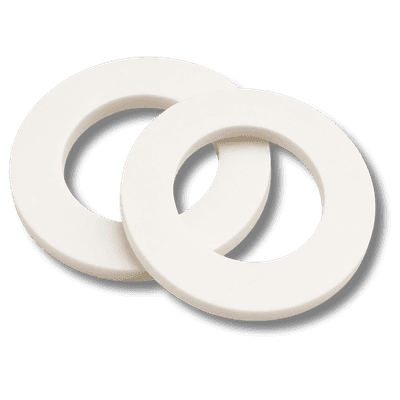
Excellent chemical resistance and a broad temperature range
Discover PTFE Gaskets →
ARAMID

Excellent mechanical strength and wear resistance
Discover Aramid Gaskets →
GRAPHITE
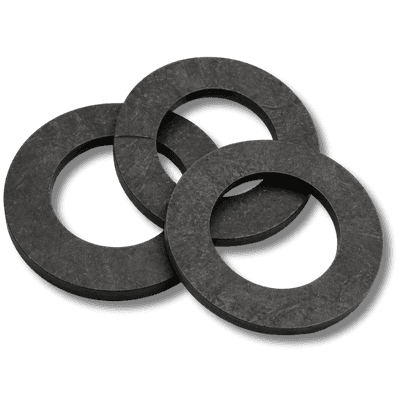
Excellent high-temperature performance and thermal cycling resistance
Discover Graphite Gaskets →
EPDM
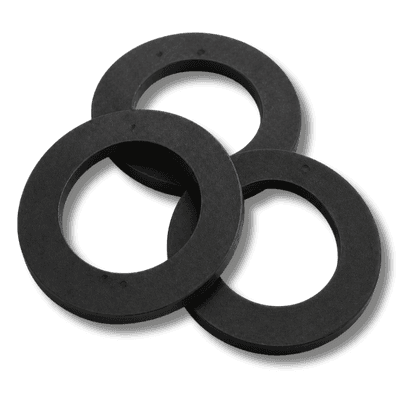
Excellent ageing resistance and weatherability
Explore our EPDM sealing solutions →
Selecting a flange gasket based solely on its dimensions is often the root cause of premature failures and costly operational downtime due to leaks.
Temperature, pressure, media, the condition of the ANSI/ASME flanges, and operational stresses must all be evaluated to ensure durable process piping sealing and to minimize industrial maintenance interventions.
Whether you require flat flange gaskets, spiral wound gaskets, or custom-engineered geometries, our sealing solutions integrate seamlessly into your preventive and corrective industrial maintenance programs.

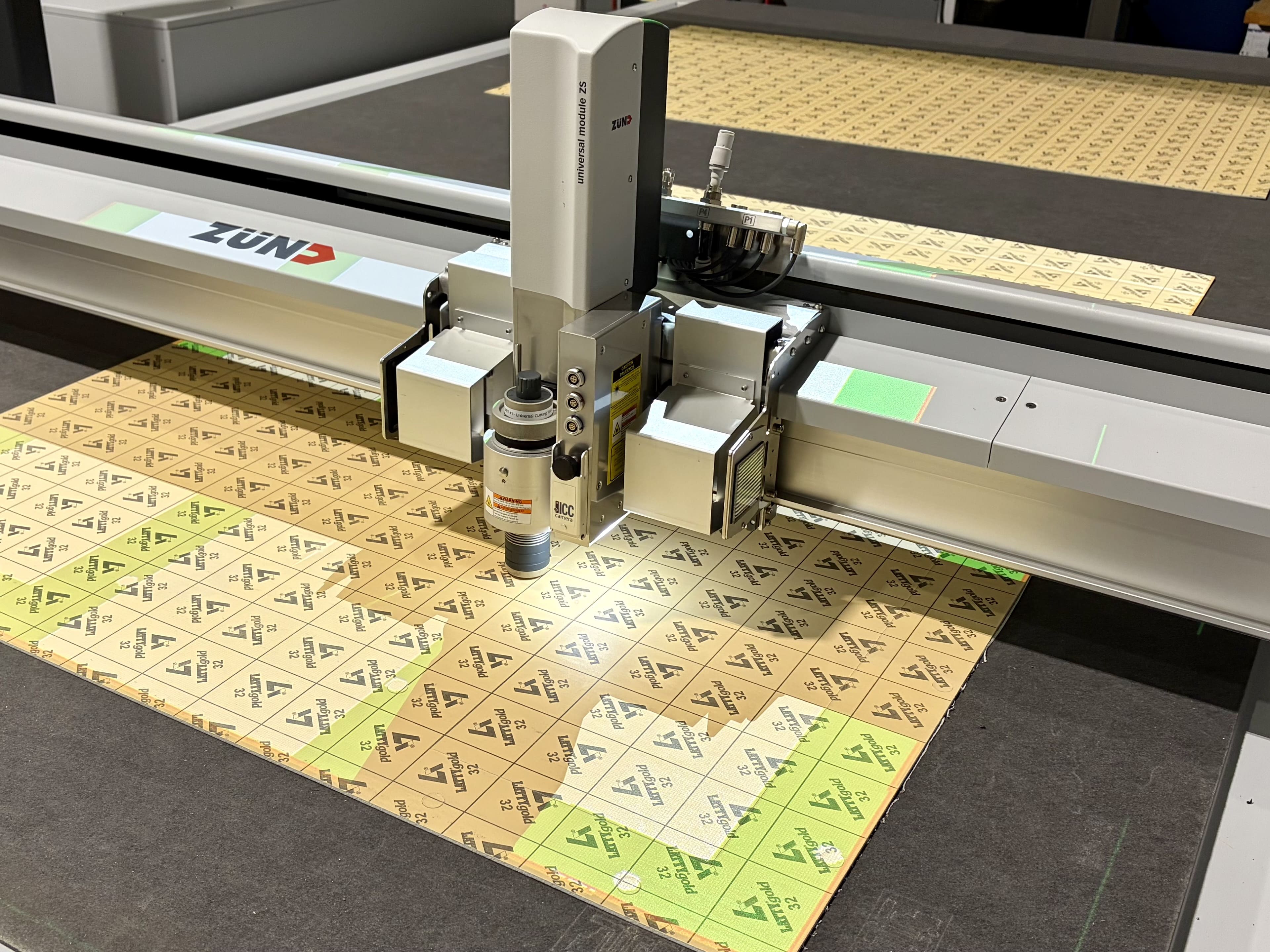
Cutting Surface
6’ x 12’
1.8 x 3.2 m
Precision of ± 0.1 mm
Custom prototypes / Medium & large-volume production
Replication from drawings, photographs, or digital files
Our sealing solutions are used in a wide variety of industrial equipment and process piping systems.
Refining and Petroleum Processing
Hydrocarbon Transmission
Tanks and Vessels
Oils, Fuels, and Lubricants
Organic solvents
Fluid Transfer Systems
Process Reactors
FKM-compatible acids
Industrial Pumping Solutions
Hydraulic systems
Compressors & Rotating Equipment
Valves and Flanges

TOOL · GASKET & SEAL COMPARATOR
Explore 148 sheet gasket product codes, including the Flexitallic SIGMA, Thermiculite, and Flexicarb lines. Compare PTFE, graphite, vermiculite, and compressed fibre formulations to plan your next replacement.
WHAT YOU CAN DO
01
Search by Part Number
By brand or product name
02
Compare Materials
PTFE, graphite, vermiculite, and compressed fibre
03
Review Documentation
Manufacturer Technical Data Sheets
A specification sheet comparison is no substitute for technical validation.
FAQ
Find here the answers to your most common questions about our products and services.