Let's make

Let's make

your project

your project

flow!

flow!

Aramid Gaskets

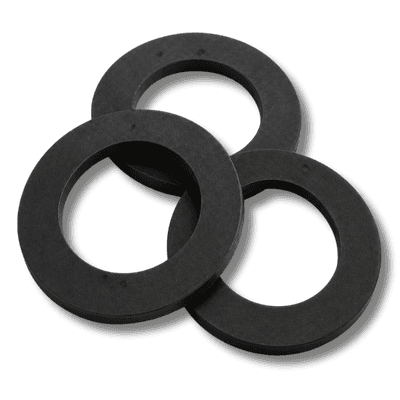
Aramid gaskets offer an excellent balance of mechanical strength, pressure resistance, and cost-efficiency. They are widely utilized for sealing systems in steam, hot water, oils, compressed air, and non-highly oxidizing industrial fluids.

Aramid gaskets offer an excellent balance of mechanical strength, pressure resistance, and cost-efficiency. They are widely utilized for sealing systems in steam, hot water, oils, compressed air, and non-highly oxidizing industrial fluids.

Aramid Sealing Gasket - VAMECA

Temperature

0°C to 440°C

Pressure

0 to 1500 psi

Typical Applications

Hot water, compressed air, and industrial oils

Temperature

0°C to 440°C

Pressure

0 to 1500 psi

Typical Applications

Hot water, compressed air, and industrial oils

Introducing Aramid

Aramid gaskets are manufactured from compressed aramid fibers combined with an elastomer binder, typically NBR. This formulation delivers outstanding mechanical strength, along with excellent temperature and pressure resistance.

Widely utilized across industrial applications, aramid gaskets provide a cost-effective and highly reliable sealing solution for flanges, pumps, heat exchangers, piping systems, and process equipment.

Depending on the specific grade selected, they are compatible with a broad range of media, including water, low- and medium-pressure steam, mineral oils, light hydrocarbons, and compressed air.

Aramid gaskets are manufactured from compressed aramid fibers combined with an elastomer binder, typically NBR. This formulation delivers outstanding mechanical strength, along with excellent temperature and pressure resistance.

Widely utilized across industrial applications, aramid gaskets provide a cost-effective and highly reliable sealing solution for flanges, pumps, heat exchangers, piping systems, and process equipment.

Depending on the specific grade selected, they are compatible with a broad range of media, including water, low- and medium-pressure steam, mineral oils, light hydrocarbons, and compressed air.

Key Benefits

Excellent mechanical strength

Cost-effective, versatile solution

Excellent resistance to compression and creep

High availability of certified industrial-grade solutions

Engineered for general process applications

Sample Materials

LATTYGOLD 32

LATTYGOLD 32

Gasket sheet composed of synthetic fibres bonded with an NBR-SBR elastomer blend and compressed. Designed for applications involving mildly aggressive fluids (including water, oils, and fuels).

Gasket sheet composed of synthetic fibres bonded with an NBR-SBR elastomer blend and compressed. Designed for applications involving mildly aggressive fluids (including water, oils, and fuels).

Temperature Rating

Temperature Rating

0°C to 300°C

0°C to 300°C

Pressure

Pressure

0 to 870 psi

0 to 870 psi

Colour

Colour

Green

Green

Finishing

Finishing

Dual-sided anti-stick coating

Dual-sided anti-stick coating

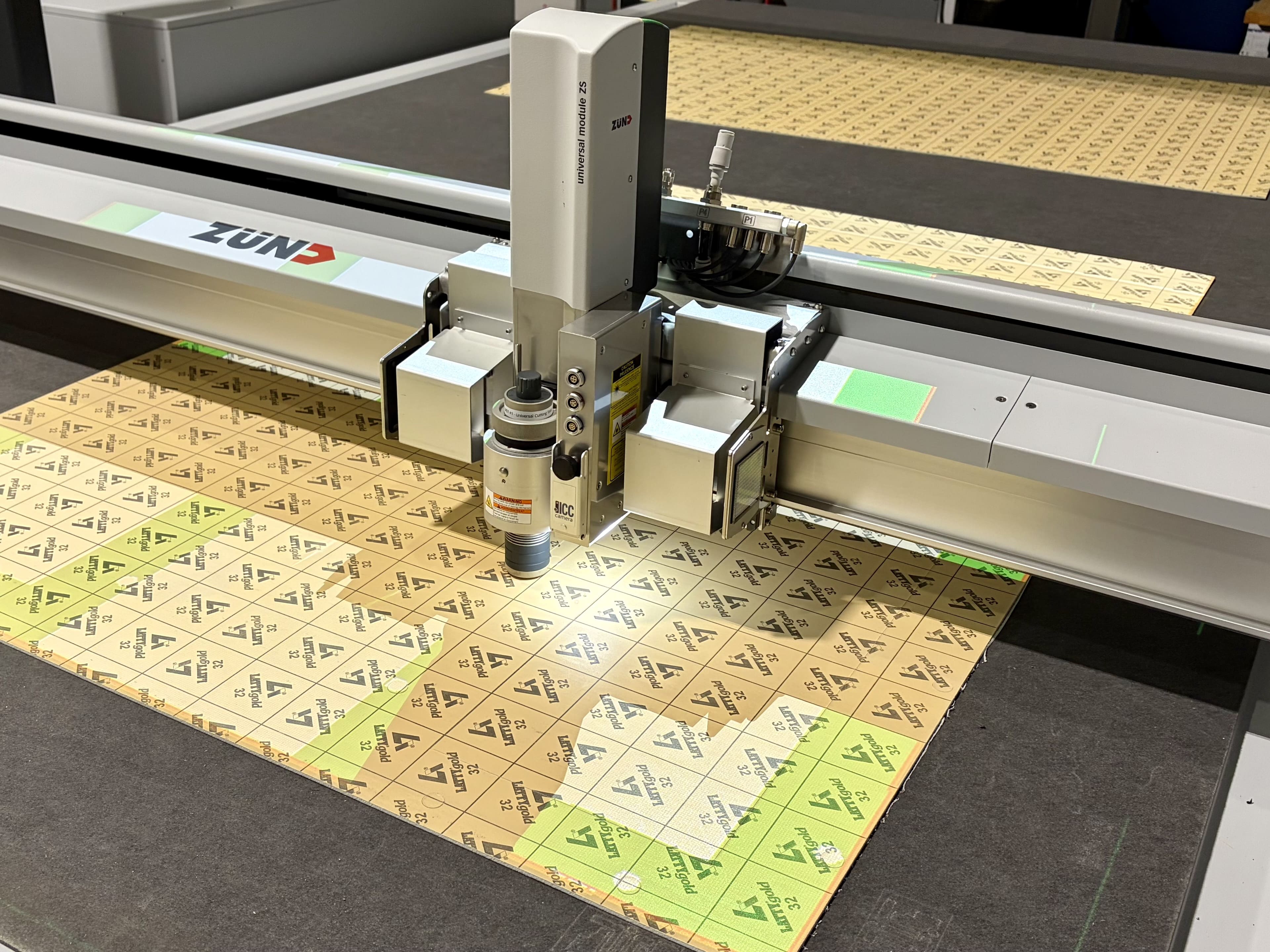
Zünd CNC cutting table for industrial gasket manufacturing

LATTYGOLD 92

LATTYGOLD 92

High-performance aramid gasket. Compressed jointing sheet made of aramid fibres, mineral fibres, and fillers finely bonded in an elastomer matrix.

High-performance aramid gasket. Compressed jointing sheet made of aramid fibres, mineral fibres, and fillers finely bonded in an elastomer matrix.

Temperature Rating

Temperature Rating

0°C to 440°C

0°C to 440°C

Pressure

Pressure

0 to 1,500 psi

0 to 1,500 psi

Colour

Colour

Yellow

Yellow

Surface Finish

Surface Finish

Dual-sided anti-stick coating

Dual-sided anti-stick coating

Certifications & Approvals

Certifications & Approvals

BAM TÜV DVGW KTW CE 1935/2004 PMUC

BAM – TÜV – DVGW – KTW – CE 1935/2004 – PMUC

Zünd CNC cutting system for industrial gasket fabrication

Contact our experts to select the optimal sealing material for your specific application

Contact our experts to select the optimal sealing material for your specific application

Aramid Chemical Compatibility Chart

Search for a fluid or filter by family to verify the resistance of an aramid gasket and its maximum operating temperature.
Final validation depends on the actual process conditions; contact us to obtain expert, tailored advice.

Search for a fluid or filter by family to verify the resistance of an aramid gasket and its maximum operating temperature.
Final validation depends on the actual process conditions; contact us to obtain expert, tailored advice.

43 fluides affichés
FluideConditionAramideRepère T°Point de vigilance réel
Eau froide
H₂O
Potable/industrielleExcellente~80 °C*Usage courant. Pour eau potable, valider le grade et la conformité NSF/ACS selon le marché.
Eau chaude
H₂O
Boucle chaudeBonne~120 °C*Généralement adapté. Sur cycles chaud/froid, surveiller relaxation et reprise de serrage.
Vapeur saturée
H₂O
Basse à moyenne pressionÀ validerÀ valider / ValidateCompatible seulement si la feuille est homologuée vapeur. Éviter vapeur surchauffée; graphite souvent plus robuste.
Condensat
H₂O
Retour vapeurBonne~120 °C*Souvent acceptable. Valider température, coups de bélier et cycles thermiques.
Eau de mer / saumure
NaCl + H₂O
Solution salineBonne~100 °C*Bon comportement du joint; vérifier surtout corrosion des brides et boulonnerie.
Glycol éthylène
C₂H₆O₂
Eau/glycol inhibéExcellente~120 °C*Bon usage HVAC/industriel. Valider inhibiteurs et température réelle.
Glycol propylène
C₃H₈O₂
Eau/glycolExcellente~120 °C*Bon usage courant. Pour alimentaire, valider grade du joint et du fluide.
Lait / produits alimentaires aqueux
Mélange / Blend
Nettoyage modéréBonne~100 °C*Possible si grade conforme. Attention aux cycles CIP chauds et aux produits de nettoyage forts.
Huile minérale
Mélange / Blend
LubrificationExcellente~150 °C*Très bon service typique pour aramide/NBR. Valider additifs et température continue.
Huiles hydrauliques minérales
Mélange / Blend
ISO VG / HM-HLPExcellente~150 °C*Bon choix courant. Vérifier additifs, pression et finition des brides.
Diesel / gazole
Mélange / Blend
CarburantExcellente~120 °C*Compatible pour la plupart des feuilles aramide/NBR. Valider biodiesel et additifs.
Kérosène
Mélange / Blend
CarburantExcellente~120 °C*Bon usage courant. Valider température, pression et exigences incendie/ATEX.
Essence
Mélange / Blend
CarburantBonne~80 °C*Souvent acceptable avec NBR, mais plus sensible aux aromatiques/oxygénés. Valider formulation réelle.
Mazout / fuel oil
Mélange / Blend
ChauffageExcellente~150 °C*Bon service typique. Attention aux températures proches des limites de la feuille.
Huile thermique
Mélange / Blend
Fluide caloporteurÀ validerÀ valider / ValidatePossible à température modérée, mais graphite préférable en haute température/cycles sévères.
Bitume
Mélange / Blend
ChaudÀ validerÀ valider / ValidatePas le choix standard. Température, fluage et colmatage orientent souvent vers graphite ou solution dédiée.
Solvants aromatiques
C₇H₈ / C₈H₁₀
Toluène / xylèneNon recommandéÀ éviter avec aramide/NBR standard : gonflement du liant possible. Préférer PTFE/graphite selon service.
Air comprimé
Air
Sec/humideExcellente~120 °C*Très bon usage courant. Vérifier présence d’huile compresseur et température de refoulement.
Azote
N₂
GazExcellente~150 °C*Inerte. Valider pression, taux de fuite requis et serrage.
Gaz naturel
CH₄
MéthaneBonne~100 °C*Possible avec grade adapté. Valider normes gaz, essais d’étanchéité et pression.
Propane / butane
C₃H₈ / C₄H₁₀
GPLBonne~80 °C*Souvent compatible. Valider basse température, pression et réglementation gaz.
CO₂
CO₂
Gaz / liquideBonne~80 °C*Généralement acceptable. Valider basse température en détente ou CO₂ liquide.
Oxygène
O₂
Service O₂À validerÀ valider / ValidateÀ valider obligatoirement : nettoyage oxygène, compatibilité du liant, procédure et risque d’inflammation.
Ammoniac
NH₃
Gaz / solutionÀ validerÀ valider / ValidatePeut être limite selon liant. Valider concentration, température et grade exact du joint.
Acides faibles dilués
CH₃COOH / C₆H₈O₇
Acétique / citrique diluéBonne~80 °C*Possible à basse température et faible concentration. Ce n’est pas une matière pour acides forts.
Acide phosphorique
H₃PO₄
DiluéÀ validerÀ valider / ValidateÀ présélectionner seulement en dilution. Concentré/chaud : préférer PTFE ou matériau dédié.
Acide chlorhydrique
HCl
Même diluéNon recommandéNon recommandé pour aramide standard. Préférer PTFE pour HCl, surtout concentré ou chaud.
Acide sulfurique
H₂SO₄
Concentré ou chaudNon recommandéNon recommandé en aramide standard. Risque d’attaque du liant et perte mécanique.
Acide nitrique
HNO₃
OxydantNon recommandéNon recommandé. Acide oxydant fort : orienter vers PTFE après validation.
Solutions neutres
Mélange / Blend
Sels / eaux de procédéExcellente~100 °C*Bon domaine d’emploi si pH proche neutre et température modérée.
Soude caustique
NaOH
DiluéeÀ validerÀ valider / ValidatePossible en dilution et température modérée. Forte concentration/chaud : valider ou choisir PTFE/EPDM selon service.
Potasse caustique
KOH
DiluéeÀ validerÀ valider / ValidateMême logique que la soude : dilution/température modérée seulement en présélection.
Carbonate de sodium
Na₂CO₃
Solution alcaline douceBonne~80 °C*Généralement acceptable si concentration et température restent modérées.
Nettoyants CIP alcalins
Mélange / Blend
Chaud / concentréÀ validerÀ valider / ValidateÀ valider. Les cycles chauds et produits concentrés peuvent dégrader le liant.
Alcools
C₂H₅OH / CH₃OH
Éthanol / méthanolBonne~60 °C*Souvent acceptable à température modérée. Valider concentration, durée d’exposition et grade du liant.
Acétone / MEK
C₃H₆O / C₄H₈O
CétonesNon recommandéNon recommandé avec NBR/SBR : gonflement et perte de tenue possibles. Préférer PTFE.
Acétate d’éthyle
C₄H₈O₂
EsterNon recommandéNon recommandé pour aramide/NBR standard. Les esters attaquent souvent les liants nitrile/SBR.
Solvants chlorés
CH₂Cl₂ / C₂HCl₃
Dichlorométhane / TCENon recommandéNon recommandé. Risque élevé de gonflement/extraction du liant. Préférer PTFE.
Éthers / THF
C₄H₈O
Solvants polairesNon recommandéNon recommandé en présélection pour aramide standard. Valider matériau dédié si nécessaire.
Eau de Javel
NaOCl
HypochloriteÀ validerÀ valider / ValidateÀ valider seulement en faible concentration/froid. Oxydant : risque sur fibres/liant à chaud ou concentré.
Peroxyde d’hydrogène
H₂O₂
OxydantNon recommandéÀ éviter en aramide standard, surtout concentré ou chaud. Préférer PTFE selon service.
Chlore
Cl₂
Sec ou humideNon recommandéNon recommandé. Fluide oxydant/agressif : choisir matériau dédié et procédure dédiée.
Ozone
O₃
Gaz / eau ozonéeNon recommandéNon recommandé pour aramide/liant élastomère standard. Oxydation accélérée possible.
ExcellenteBonneÀ validerNon recommandé* Repère indicatif pour joints en fibres aramide comprimées. La compatibilité dépend fortement du liant élastomère (NBR, SBR, EPDM…), de la pression, de la température, du serrage, des brides et des cycles thermiques.

Can't find your process fluid?

Our specialists can validate chemical compatibility, pressure and temperature ratings, and recommend the appropriate sealing material.

Can't find your process fluid?

Our specialists can validate chemical compatibility, pressure and temperature ratings, and recommend the appropriate sealing material.

Custom Recommendation

Why Industrial Operators Choose VAMECA

Selecting a flange gasket based solely on its dimensions is often the root cause of premature failures and costly operational downtime due to leaks.

Temperature, pressure, media, the condition of the ANSI/ASME flanges, and operational stresses must all be evaluated to ensure durable process piping sealing and to minimize industrial maintenance interventions.

Whether you require flat flange gaskets, spiral wound gaskets, or custom-engineered geometries, our sealing solutions integrate seamlessly into your preventive and corrective industrial maintenance programs.

Custom-Cut Industrial Gaskets by VAMECA

Customized analysis

Assessment of your constraints and operating environment

Customized analysis

Assessment of your constraints and operating environment

Customized analysis

Assessment of your constraints and operating environment

Optimal solution

Materials, sizes, and recommended configuration for your application

Optimal solution

Materials, sizes, and recommended configuration for your application

Optimal solution

Materials, sizes, and recommended configuration for your application

Rapid Response

We deliver tailored solutions within 24 hours.

Rapid Response

We deliver tailored solutions within 24 hours.

Rapid Response

We deliver tailored solutions within 24 hours.

Zünd CNC cutting table for industrial gasket manufacturing

OUR TECHNOLOGY

High-Precision CNC Gasket Cutting

Equipped with cutting tables from the Swiss manufacturer Zünd, we fabricate custom gaskets with exceptional precision from your drawings, digital files, or existing samples.

Equipped with cutting tables from the Swiss manufacturer Zünd, we fabricate custom gaskets with exceptional precision from your drawings, digital files, or existing samples.

Cutting Surface
6’ x 12’
1.8 x 3.2 m

Precision of ± 0.1 mm

Custom prototypes / Medium & large-volume production

Replication from drawings, photographs, or digital files

COMMON APPLICATIONS

Typical Applications for Aramid Gaskets

Our aramid gaskets offer an excellent balance of mechanical strength, pressure resistance, and cost-efficiency for a wide range of industrial applications.

Pulp & Paper

Steam drying networks

Condensate

Hot Process Water

Heat Exchangers

Manufacturing Industry

Compressed air

Thermal fluids

District heating networks

Pipe Flanges

Energy and Industrial Utilities

Industrial Boilers

Saturated steam networks

Distribution Manifolds

Thermal Recovery Systems

Flange Gaskets and Sealing Solutions for ANSI/ASME Standards - VAMECA

Flange gaskets compliant with ANSI, ASME, and EN standards

Flange gaskets compliant with ANSI, ASME, and EN standards

Flange gaskets compliant with ANSI, ASME, and EN standards

VAMECA manufactures flat and spiral wound flange gaskets for industrial steam, chemical, water, gas, and thermal oil piping systems. Our gaskets are cut to standard dimensions in compliance with ASME B16.21, ASME B16.20, and EN 1514 for ANSI Class 150, 300, and 600 flanges, as well as European PN industrial flanges.

Available in PTFE, graphite, aramid, rubber, and high-performance materials, our gaskets deliver reliable sealing for industrial piping, valves, pumps, heat exchangers, and pressure vessels.

VAMECA manufactures flat and spiral wound flange gaskets for industrial steam, chemical, water, gas, and thermal oil piping systems. Our gaskets are cut to standard dimensions in compliance with ASME B16.21, ASME B16.20, and EN 1514 for ANSI Class 150, 300, and 600 flanges, as well as European PN industrial flanges.

Available in PTFE, graphite, aramid, rubber, and high-performance materials, our gaskets deliver reliable sealing for industrial piping, valves, pumps, heat exchangers, and pressure vessels.

FAQ

Before saying yes, ask all your questions.

Find here the answers to your most common questions about our products and services.

Is an aramid gasket compatible with steam applications?

When should you specify an aramid gasket over a PTFE gasket?

What is the difference between an aramid gasket and a graphite gasket?

Are aramid gaskets suitable for thermal oils?

Are aramid gaskets compatible with hydrocarbons?

Are you able to reverse-engineer and replicate an existing seal?

Are you able to manufacture custom aramid gaskets to specification?

Do you manufacture gaskets for ANSI and ASME flanges?

Can you manufacture a custom seal based on a photo?

Do you deliver industrial sealing solutions nationwide across Canada?