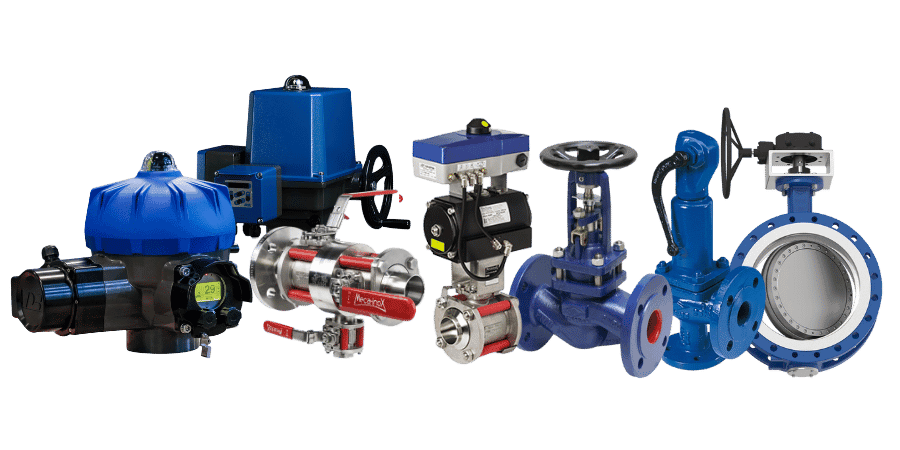

The 3800 is a quarter-turn eccentric rotary segmented ball valve (E-Ball), whereas a globe valve utilizes a linear-motion stem and plug. Selection depends on your specific flow rates, pressure drop, wear resistance, and required shut-off sealing performance.
1 to 8 in. · 150/300 RF Flanges
WCB or CF8M stainless steel body
Cv up to 1,420 depending on trim
Rotary E-Ball · 100:1 Rangeability
Why Choose an Eccentric Segmented Ball Valve?
The 3800 Series utilizes an eccentric segmented ball design. Upon opening, the segment lifts off the seat ring rather than continuously rubbing across it, significantly reducing wear in modulating service. Its quarter-turn (90°) rotation and available flow paths set it apart from conventional linear globe valves. Precise configuration is tailored to your specific process conditions, including solids, corrosion, cavitation, pressure drop, and required shut-off class.
Control and Rangeability
Quarter-turn rotary actuation with a certified 100:1 rangeability control characteristic, subject to confirmation based on actual operating conditions and control spans.
Body Materials
Standard A216 WCB cast steel or A351 CF8M cast stainless steel; special alloys available upon consultation with the manufacturer. Class 150 or 300 raised-face flanges.
Interchangeable Trim
Selection of 316 stainless steel or Alloy 6 metal trim, TTZ ceramic, and TFE/PTFE or PEEK soft seats. Shut-off is rated Class IV, IV+, or VI depending on the configuration.
Flow Direction
Flow-to-open or flow-to-close configurations based on throttling, erosion, and cavitation control objectives. TFE and PEEK soft seats require a flow-to-close orientation.
Metal-seated, TTZ ceramic, or soft-seated options
Three trim designs within the same E-Ball series: their erosion resistance, allowable differential pressure, and shut-off class vary.
METALLIC TRIM
316 Stainless Steel and Alloy 6
316 stainless steel is the standard choice for a wide range of compatible media, while Alloy 6 is engineered for more abrasive services or applications prone to cavitation. Both configurations feature a metal seat.
Valve Trim
316 SS or Alloy 6
Flowing ΔP
up to 300 / 450 psi*
Sealing Solutions
Class IV
Applications
Process and Utility Systems
Alloy 6 is well-suited for services where cavitation accelerates wear. For particulate-laden fluids, TTZ ceramic trim provides another high-performance option worth evaluating.
TRIM FOR EROSIVE SERVICE
TTZ Zirconia Ceramic
The TTZ zirconia trim is engineered for compatible erosive or corrosive media, including pulps, slurries, and particulate-laden fluids. In a flow-to-close configuration, Warren Controls rates this solution at Class IV+ shutoff.
Material
TTZ Ceramic
Flowing ΔP
up to 550 psi*
Sealing Solutions
Class IV+*
Key Advantage
Erosion Resistance
Class IV+ is a proprietary Warren Controls designation, distinct from standard ANSI/FCI shut-off classes. It applies specifically to select TTZ configurations in a flow-to-close orientation.
SOFT-SEATED SHUT-OFF
TFE (PTFE) or PEEK seats
For non-erosive media requiring minimal seat leakage, TFE or PEEK soft seats provide Class VI shutoff. They must be installed in a flow-to-close configuration.
Sealing Solutions
Class VI
TFE
100 psid · 340 °F max.*
PEEK
200 psid · 450 °F max.*
Flow Direction
Flow-to-close configuration required
TFE and PEEK seats are engineered for Class VI shut-off in the flow-to-close direction, with distinct operating limits for temperature and differential pressure (ΔP).
Body, packing, and operating limits to inspect
The maximum rated temperature specified for the series is not guaranteed across all configurations. Bearing material, stem sealing, and actuator mounting arrangements directly dictate the allowable operating limits.
CONSTRUCTION AND WEAR RESISTANCE
WCB, CF8M, or special alloy body
WCB and CF8M are standard; specialty alloys can be evaluated on a case-by-case basis for corrosion resistance. Material selection must be validated according to process conditions.
PEEK or Alloy 6B Bearings
PEEK bearings are rated up to 450°F. Alloy 6B bearings are engineered for higher temperatures and more demanding mechanical loads; accompanying Fluoraz seals carry their own operational limits.
PTFE or graphite stem and packing
Select configurations incorporating graphite, Alloy 6B bearings, and an indirect drive shaft achieve ratings up to 800°F on the process side. PTFE packings and specific PEEK or gasketed configurations will restrict operating temperatures.
HYDRAULICS AND SEALING SOLUTIONS
Flow-to-open / flow-to-close direction
Flow-to-open provides a smoother transition under high ΔP conditions and can delay cavitation, while flow-to-close can offer superior erosion resistance. The optimal flow direction must be confirmed based on trim selection.
Through-Shaft or Split-Shaft
A through-shaft design is common. A split-shaft configuration provides an unobstructed flow path and can be beneficial for certain thick slurries, though it requires more complex maintenance.
Seat Leakage
316/Alloy 6: Class IV; TTZ flow-to-close: Manufacturer Class IV+; TFE and PEEK in flow-to-close: Class VI. No shutoff class should be assumed without a specific configuration code.
For an engineering consultation, please provide media type and particulate details, Cv/flow rates, upstream/downstream pressures, operating temperature, flow direction, shut-off leakage class, metallurgy/materials, and control signal requirements.
Where should a Warren Controls 3800 valve be installed?
The 3800 E-Ball is an ideal solution when the media, flow capacity, or wear make a conventional globe valve less suitable. Feasibility depends on your specific process conditions and configuration.
QUARTER-TURN ACTUATION
Pneumatic Actuators and ISO 5211 Interface
The 3800 Series is specified with pneumatic rack-and-pinion actuators and a selection of positioners. Its square stem and ISO 5211 mounting interface also allow for engineered actuation solutions to meet your application needs. A bare-stem configuration is also available depending on requirements.
90° Rotation
The quarter-turn actuator must deliver the calculated torque for the specific differential pressure, disc position, and selected seat type.
Pneumatic or 4–20 mA
Pneumatic signal or 4–20 mA electro-pneumatic positioner; various communication protocols are available in the manufacturer's catalogue depending on the equipment.
Spring return (fail-open or fail-close)
Assemblies can be configured for fail-open or fail-close operation upon loss of air; the actual fail position depends on the specific actuator and mounting arrangement.
Required engineering data for a 3800
A rotary valve project must specify the control function, trim materials, operating loads, and actuation logic.
MEDIA
Media Composition and Suspended Solids
Media, solids content, particle size distribution, viscosity, corrosion, and erosion or cavitation risks.
PIPING
Flanges and Face-to-Face Dimensions
NPS 1 to 8 in. diameter, Class 150/300 RF flanges, flow direction, and face-to-face dimensions.
SIZING
Cv and Differential Pressure
Minimum, normal, and maximum flow rates, upstream and downstream pressures, and shut-off pressure drop to determine the appropriate trim selection and torque requirements.
ORDER
Instrument Air and Fail-Safe Position
Please specify air supply, control signal, mounting type, fail-safe position, and required accessories.
THE ADVANTAGES OF VAMECA
VAMECA helps you qualify the application, compare trim options, and prepare a quote request based on manufacturer documentation. Stock availability, lead time, and CRN are confirmed strictly for the targeted part number.
FAQ
E-Ball technology, TTZ, Class VI shut-off seating, flow capacities, temperature ratings, valve automation, and retrofits.
Warren Controls 3800: Sizing, Selection, and Quotes in Quebec
Whether for a control application, a replacement rotary valve, or severe erosive service, VAMECA provides the technical expertise to help you select the optimal 3800 Series configuration and options—tailored to your media, performance specifications, and installation requirements.
Trim Selection
Compare metal, TTZ, or soft seats based on abrasion, chemical compatibility, allowable leakage, and temperature.
Assembly Verification
Inspect flanges, shafts, torque, positioner, and fail-safe operation.
Documented Proposal
Cross-reference manufacturer specifications, exact part numbers, and regulatory compliance standards prior to submitting the quote.