Custom Cork-Rubber Gaskets

Custom Cork-Rubber Gaskets

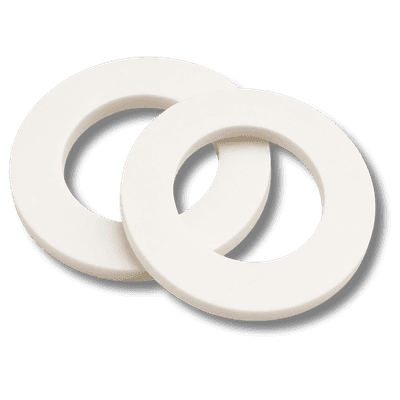
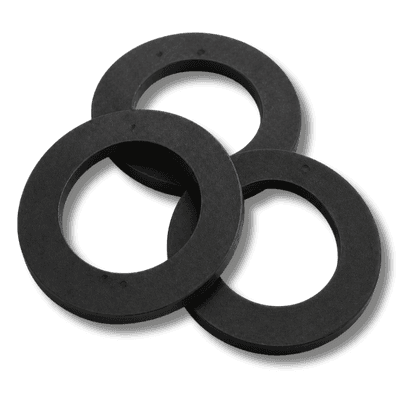
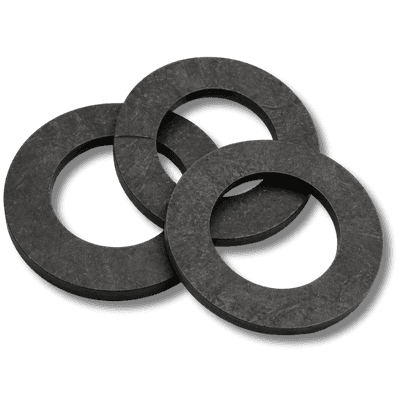
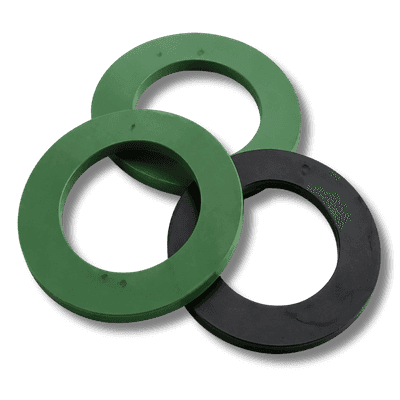
Custom-cut cork-rubber gaskets engineered for housings, covers, pumps, and industrial equipment. This compressible composite combines cork granules with an NBR or SBR elastomer binder to conform reliably to mating surfaces and bolt-load variations.

Custom-cut cork-rubber gaskets engineered for housings, covers, pumps, and industrial equipment. This compressible composite combines cork granules with an NBR or SBR elastomer binder to conform reliably to mating surfaces and bolt-load variations.

Placeholder for industrial gasket illustration — cork-rubber photograph to be inserted

Temperature

Temperature

-30 to +125 °C depending on the grade

-30 to +125 °C depending on the grade

Compounds

Compounds

Cork / NBR or cork / SBR

Cork / NBR or cork / SBR

Typical Applications

Typical Applications

Housings, gearboxes, flat gaskets

Housings, gearboxes, flat gaskets

Temperature

-30 to +125 °C depending on the grade

Compounds

Cork / NBR or cork / SBR

Typical Applications

Housings, gearboxes, flat gaskets

What is a cork-rubber gasket?

What is a cork-rubber gasket?

Cork-rubber, also known as rubber cork or cork-rubber gasket material, is a composite engineered by blending cork granules with an elastomeric binder. Unlike pure natural cork or solid rubber sheeting, it combines controlled compressibility with superior conformability to surface irregularities.

Selecting the appropriate elastomer binder is critical: a cork/NBR formulation is typically specified for oils, fuels, or compatible coolants, whereas a cork/SBR formulation is well suited for lightly loaded gaskets and select lubricants. Technical data for TS1400 and TS1521 demonstrate distinctly different mechanical performance profiles.

Gasket selection and sizing depend on service fluid, operating temperature, flange condition and rigidity, bolt load, and material thickness. Stress values measured during compression testing must not be confused with the allowable operating pressure of the piping network.

Advantages of Cork-Rubber

Advantages of Cork-Rubber

Excellent conformability to irregular surfaces

Engineered compressibility optimized for low-rigidity flanges

Lateral Extrusion Limits by Grade

NBR or SBR formulations based on medium compatibility

Precision Cutting of Complex Flat Gaskets

Cork-Rubber Sheet Gasketing for Industrial Applications

Cork-Rubber Sheet Gasketing for Industrial Applications

CORK / NBR · FLUID RESISTANCE

AMORIM TECH SEAL TS1400

AMORIM TECH SEAL TS1400

AMORIM TECH SEAL TS1400

A cork granule composite engineered with an NBR nitrile binder, designed for a broad range of engine fluids, including oils, compatible fuels, biodiesel, and coolants. Its firmer formulation is ideal for gasket applications requiring higher bolt-load capabilities. Stated technical data is provided by the manufacturer and does not reflect guaranteed local stock availability.

A cork granule composite engineered with an NBR nitrile binder, designed for a broad range of engine fluids, including oils, compatible fuels, biodiesel, and coolants. Its firmer formulation is ideal for gasket applications requiring higher bolt-load capabilities. Stated technical data is provided by the manufacturer and does not reflect guaranteed local stock availability.

A cork granule composite engineered with an NBR nitrile binder, designed for a broad range of engine fluids, including oils, compatible fuels, biodiesel, and coolants. Its firmer formulation is ideal for gasket applications requiring higher bolt-load capabilities. Stated technical data is provided by the manufacturer and does not reflect guaranteed local stock availability.

Nominal Temperature Rating

Nominal Temperature Rating

-30 to +125 °C

-30 to +125 °C

Hardness

Hardness

75–90 Shore A

75–90 Shore A

Compressibility (400 psi)

Compressibility (400 psi)

10–22%

10–22%

Tensile Strength

Tensile Strength

> 3.5 MPa

> 3.5 MPa

Placeholder for industrial gasket illustration — cork-rubber photograph to be inserted

CORK / SBR · HIGH COMPRESSIBILITY

AMORIM TECH SEAL TS1521

AMORIM TECH SEAL TS1521

AMORIM TECH SEAL TS1521

SBR-bound cork-rubber composite offering enhanced flexibility and compressibility, engineered specifically for engine gaskets and assemblies with low bolt-load requirements. Recommended by the manufacturer for a wide range of lubricating fluids. Chemical compatibility with fuels or other media must be verified separately.

SBR-bound cork-rubber composite offering enhanced flexibility and compressibility, engineered specifically for engine gaskets and assemblies with low bolt-load requirements. Recommended by the manufacturer for a wide range of lubricating fluids. Chemical compatibility with fuels or other media must be verified separately.

SBR-bound cork-rubber composite offering enhanced flexibility and compressibility, engineered specifically for engine gaskets and assemblies with low bolt-load requirements. Recommended by the manufacturer for a wide range of lubricating fluids. Chemical compatibility with fuels or other media must be verified separately.

Nominal Temperature Rating

Nominal Temperature Rating

-30 to +110 °C

-30 to +110 °C

Hardness

Hardness

50–70 Shore A

50–70 Shore A

Compressibility (400 psi)

Compressibility (400 psi)

35–50%

35–50%

Density

Density

550–750 kg/m³

550–750 kg/m³

Tensile Strength

Tensile Strength

> 0.8 MPa

> 0.8 MPa

Placeholder for industrial gasket illustration — cork-rubber photograph to be inserted

Send us your drawing and operating conditions so our team can engineer an optimal cork-rubber gasket solution for your application.

Send us your drawing and operating conditions so our team can engineer an optimal cork-rubber gasket solution for your application.

Custom Recommendation

Custom Recommendation

Why choose VAMECA for your cork-rubber gasket needs?

Why choose VAMECA for your cork-rubber gasket needs?

Selecting a cork-rubber gasket involves much more than just dimensions. It requires an analysis of the fluid and temperature, and most importantly, flange rigidity, flatness tolerances, and available bolt load upon assembly.

We can evaluate a cork/NBR formulation, such as Amorim TS1400, against a more compressible cork/SBR blend, such as TS1521. The objective is to select a compatible sheet grade and a thickness tailored to actual operating conditions.

Working from a drawing, digital file, or existing sample, VAMECA can engineer and cut custom gaskets for housings, covers, gearboxes, or flanges. For transformer applications, grades specifically engineered for insulating oils must be evaluated.

Custom Die-Cut Industrial Gaskets

Customized Analysis

Fluid, surface, and torque assessment

Customized Analysis

Fluid, surface, and torque assessment

Customized Analysis

Fluid, surface, and torque assessment

Tailored Selection

Cork/NBR, cork/SBR, and compressibility rating

Tailored Selection

Cork/NBR, cork/SBR, and compressibility rating

Tailored Selection

Cork/NBR, cork/SBR, and compressibility rating

Technical Support

From sheet material selection to custom drawing-based cutting

Technical Support

From sheet material selection to custom drawing-based cutting

Technical Support

From sheet material selection to custom drawing-based cutting

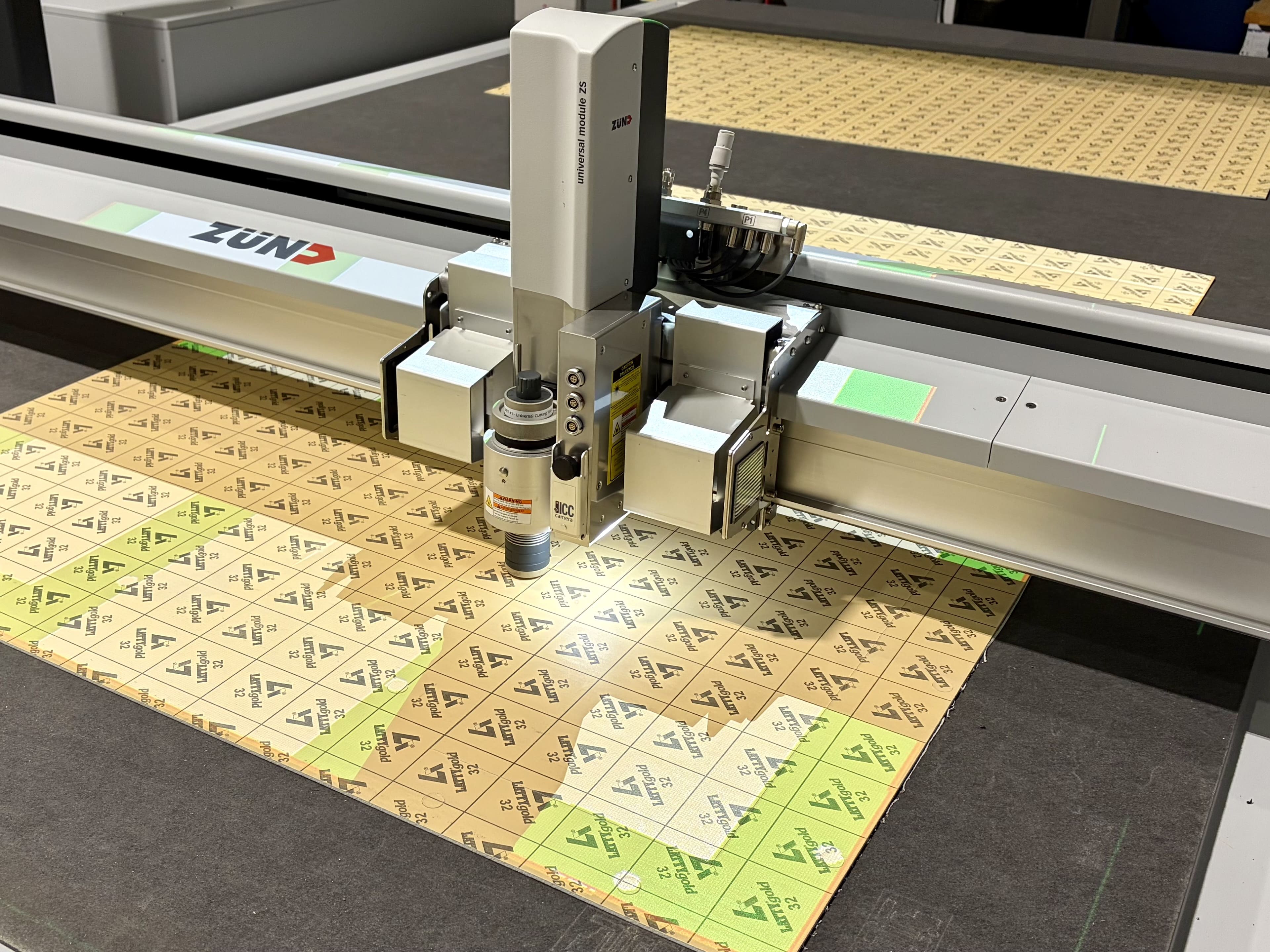
CNC Gasket Cutting on Zünd Digital Cutting Table

OUR TECHNOLOGY

OUR TECHNOLOGY

High-Precision CNC Gasket Cutting

High-Precision CNC Gasket Cutting

Equipped with cutting tables from the Swiss manufacturer Zünd, we fabricate custom gaskets with exceptional precision from your drawings, digital files, or existing samples.

Equipped with cutting tables from the Swiss manufacturer Zünd, we fabricate custom gaskets with exceptional precision from your drawings, digital files, or existing samples.

Cutting Surface
6’ x 12’
1.8 x 3.2 m

Precision of ± 0.1 mm

Custom prototypes / Medium & large-volume production

Replication from drawings, photographs, or digital files

COMMON APPLICATIONS

COMMON APPLICATIONS

Typical Applications for Cork-Rubber Gaskets

Typical Applications for Cork-Rubber Gaskets

Cork-rubber composites are ideal for static sealing applications where flange surfaces may exhibit minor flatness irregularities. Selecting cork/NBR, cork/SBR, or a specialty grade depends on your specific media, operating temperatures, and bolt load requirements.

Motors and Drives

Motors and Drives

Oil Pan Gaskets

Valve Bonnets

Gearboxes and Speed Reducers

Actuator Bonnets and Seals

Industrial Maintenance Services

Industrial Maintenance Services

Compatible Pump Covers

Lubrication System Seals

Machinery Enclosures and Access Hatches

Custom Die-Cut and Precision-Cut Parts

Electrical Equipment

Electrical Equipment

Processors with Dedicated Grade Material

Tank Gaskets and Accessories

Insulating Oil Conservator Tanks

Selection based on oil type and torque specifications

Flat sealing gasket installed on an industrial flange

Cork-rubber flat gaskets for flanges and housings

Cork-rubber flat gaskets for flanges and housings

Cork-rubber flat gaskets for flanges and housings

VAMECA manufactures precision-cut flat cork-rubber gaskets for industrial equipment casings, flanges, access ports, and covers. Standardized geometries can be engineered from drawings or specified to ASME B16.21 or EN 1514-1 flange dimensions, provided the material is suited to the assembly.

Compressibility percentages rated at 400 psi in manufacturer data sheets reflect test results, not maximum operating pressures. Contact our team with your fluid media, operating temperature, pressure, bolt load, surface finish, and volume requirements to determine the optimal material and sealing solution.

TOOL · GASKET & SEAL COMPARATOR

Compare Garlock, KLINGER, TEADIT, Durlon, LATTY, and Flexitallic.

Compare Garlock, KLINGER, TEADIT, Durlon, LATTY, and Flexitallic.

Compare Garlock, KLINGER, TEADIT, Durlon, LATTY, and Flexitallic.

Explore 148 sheet gasket product codes, including the Flexitallic SIGMA, Thermiculite, and Flexicarb lines. Compare PTFE, graphite, vermiculite, and compressed fibre formulations to plan your next replacement.

WHAT YOU CAN DO

01

Search by Part Number

By brand or product name

02

Compare Materials

PTFE, graphite, vermiculite, and compressed fibre

03

Review Documentation

Manufacturer Technical Data Sheets

A specification sheet comparison is no substitute for technical validation.

FAQ

Frequently Asked Questions About Cork-Rubber Solutions

Material composition, operating temperature, oil compatibility, and custom cutting: technical guidance for selecting your cork-rubber gasket.