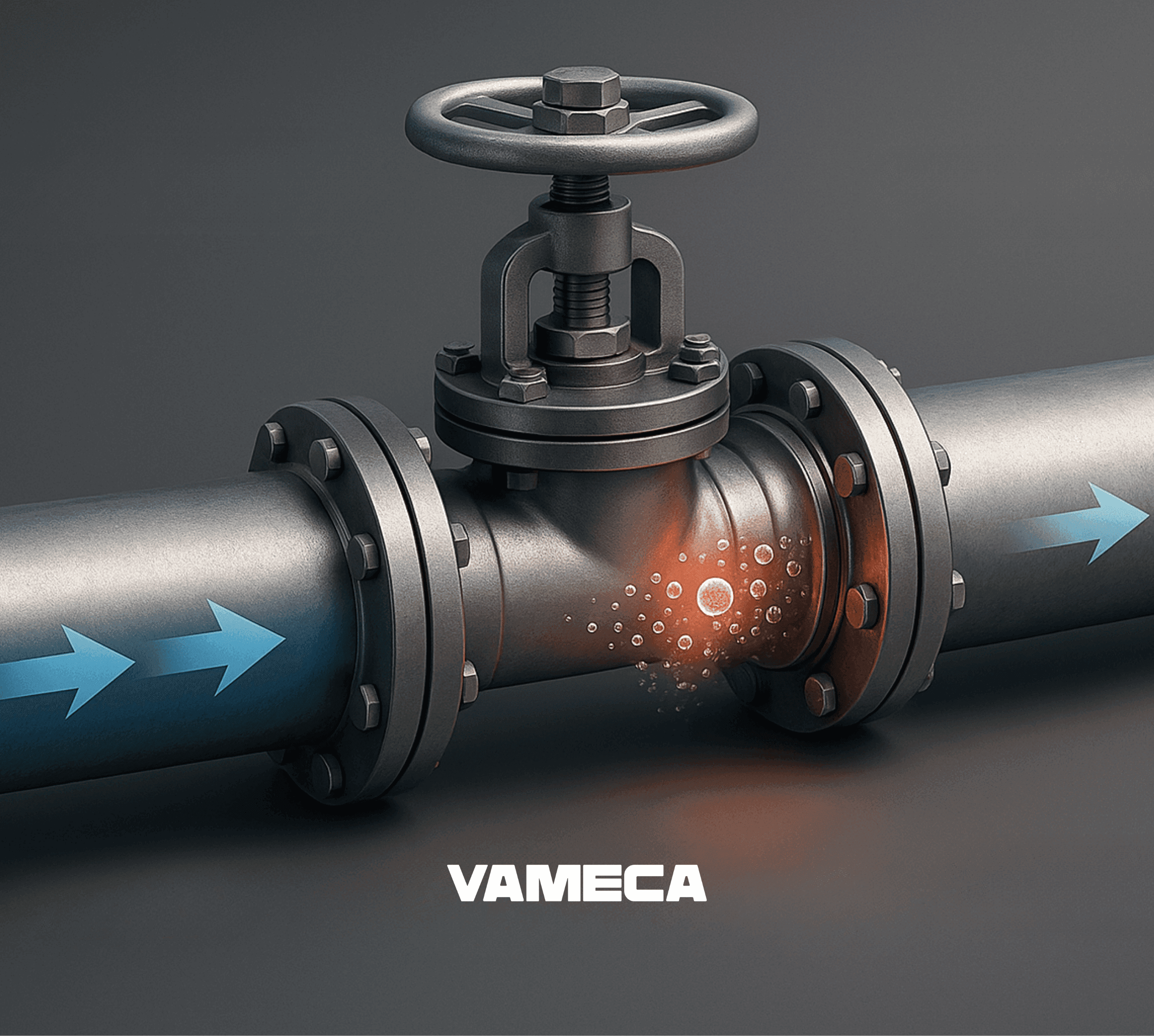
In North American industrial processes, the issue of pressure drop consistently arises whenever a fluid circulates through a network. Behind this technical term lie significant challenges: energy consumption, system reliability, and compliance with local standards (CSA, ASME B31.3, CRN).
Definition of Pressure Drop
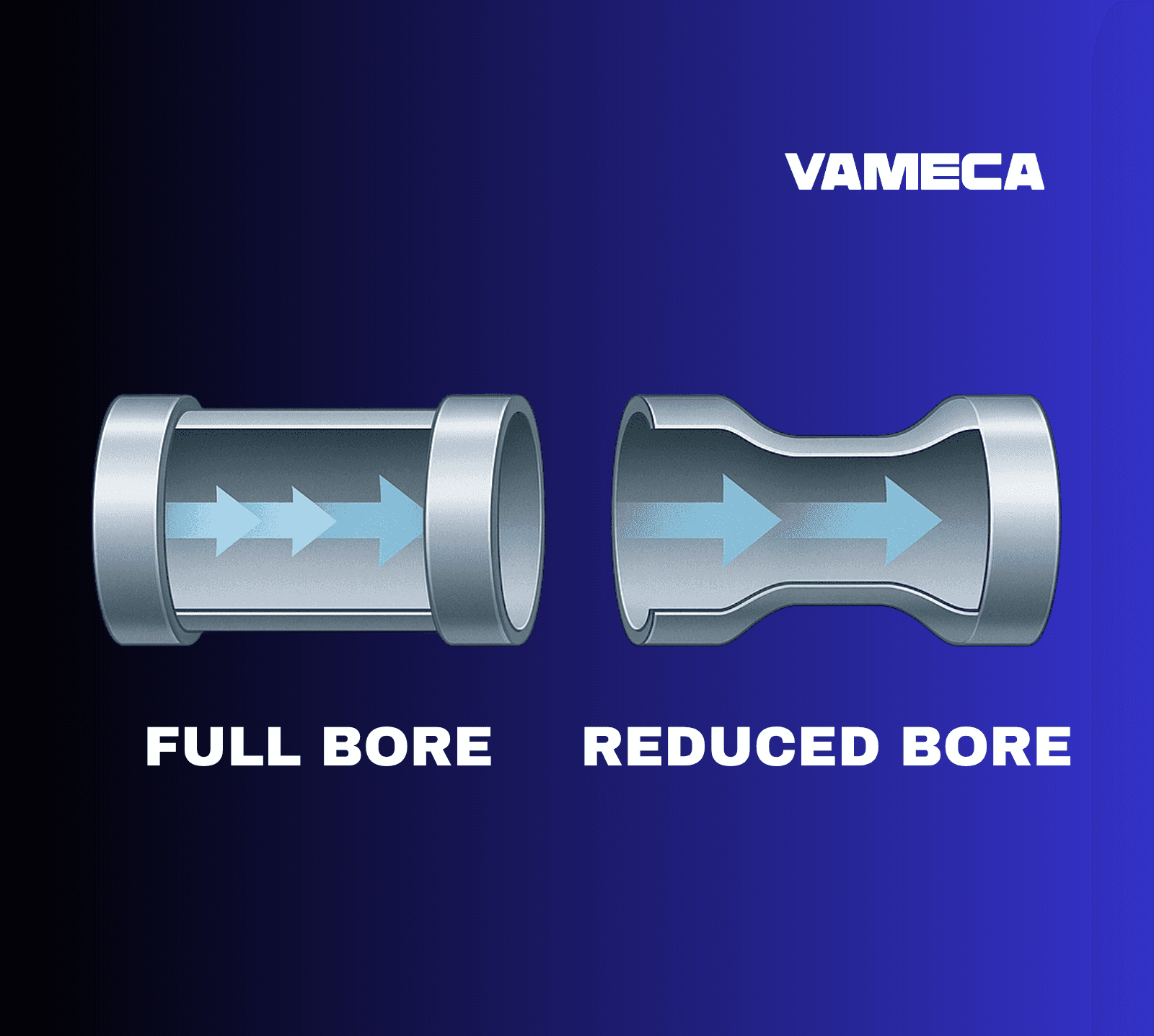
Pressure drop refers to the reduction in pressure experienced by a moving fluid due to friction and obstacles encountered in pipes and equipment.
This is reflected by a difference between the inlet pressure and the pressure available at the system exit.
In other words: the more resistance the fluid encounters, the greater the pressure falls.
Where Does Pressure Drop Come From?
We distinguish two main categories of losses:
Linear: related to the friction of the fluid on the inner walls of the pipes. They depend on flow rate, viscosity, material roughness, and pipe length.
Singular: caused by specific accessories such as elbows, tees, valves, check valves, or filters. Each component adds a measurable local resistance using standardized coefficients (K).
Why It’s Critical in Industry
Pressure drop directly impacts the performance and safety of fluid networks. In sectors like energy, water treatment, chemical, or food processing, neglecting this aspect can lead to additional costs and operational risks.
Tangible Impacts:
Oversizing or premature wear of pumps and compressors.
Risks of cavitation on valves and relief valves (erosion, leaks, unplanned shutdowns).
Non-compliance with CSA/ASME design requirements and CRN certified pressure limitations.
Loss of energy efficiency and increased operating costs.
How to Calculate and Control It
The calculation of pressure drop is primarily based on the Darcy-Weisbach equation and the use of K coefficients for each accessory. In North America, this data is generally provided by valve manufacturers and validated by API, ASME, or CSA standards.
Two approaches are common:
Manufacturer charts and tables, practical for simple cases.
Digital calculators, which integrate pipe length, accessories, flow rate, and fluid properties.
⚪️ At VAMECA, we have developed interactive tools that allow quick simulation of pressure drop and optimization of valve selection based on actual service conditions.
Field Application Example
In a water treatment plant in Quebec, a DN100 network over 80 meters with 4 elbows and 2 butterfly valves generates a significant pressure drop. The complete calculation (linear + singular) shows that the pump must supply additional pressure to maintain the required flow rate. Without this consideration, the installation would have been under-sized and exposed to cavitation.
Key Takeaways
Pressure drop is an essential parameter in fluid network sizing.
It must be integrated from the design stage to ensure regulatory compliance (CSA, ASME, CRN) and the durability of equipment.
Controlling it allows for reduced energy costs and prevents costly shutdowns.