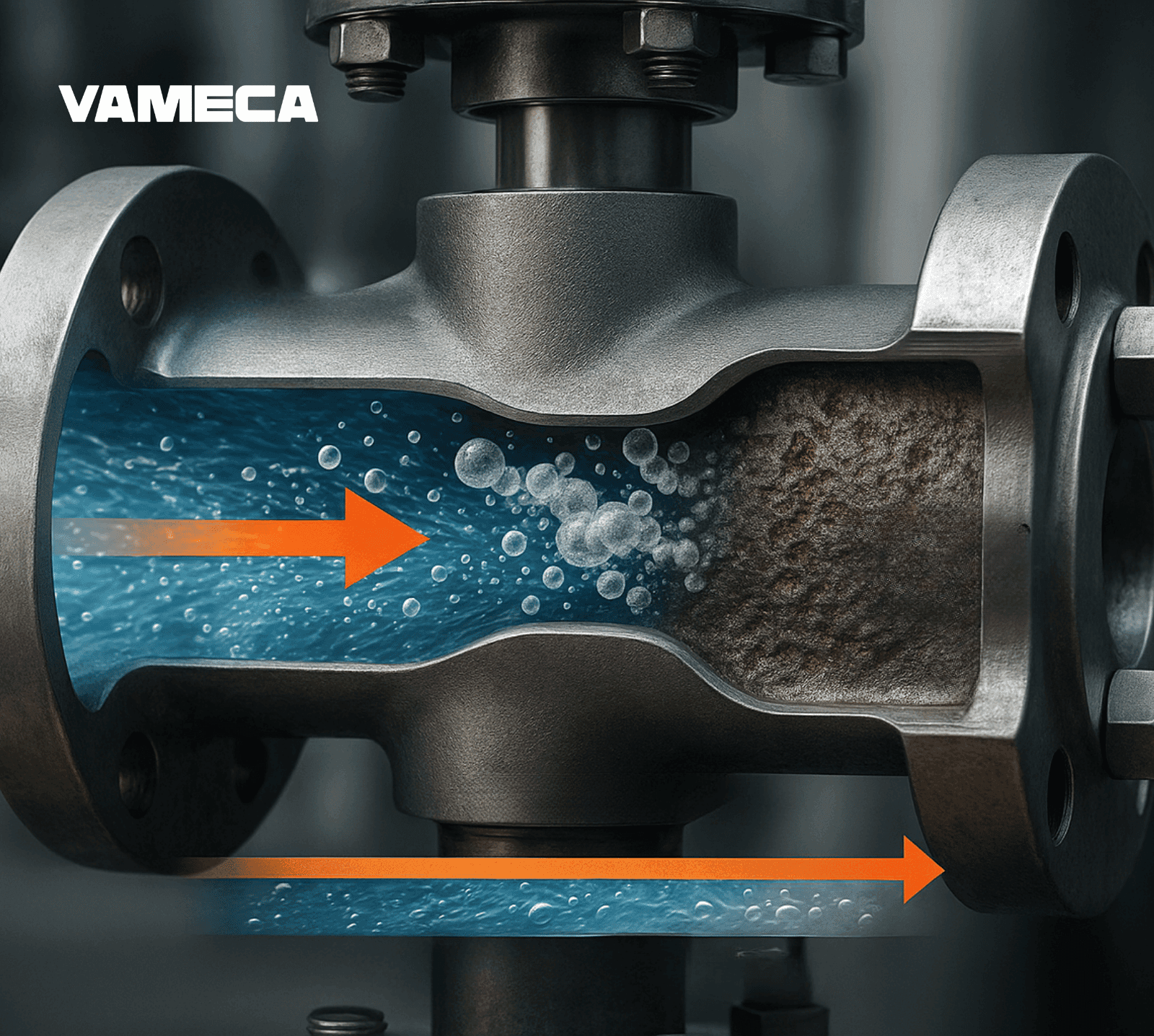
In industrial processes, cavitation is often an invisible reality... until it causes damage. Whether it's hydraulic circuits, pumps, or valves, this phenomenon can drastically reduce equipment lifespan and lead to notable performance loss.
Understanding Cavitation
Cavitation occurs when a fluid's pressure drops below its vapour pressure. Small bubbles then form in the liquid. When the pressure rises again, they implode violently, creating micro-shocks capable of directly attacking metal surfaces. It’s an insidious phenomenon: it often starts imperceptibly, but its effects quickly become destructive.
High-Risk Contexts
Cavitation is frequently found in:
control valves subject to significant pressure drops,
pumps or turbines operating outside their nominal range,
circuits where fluid temperature and pressure vary significantly.
How to Mitigate the Effects
The first approach involves the selection of appropriate valve design: anti-cavitation cages, specific seats, or control solutions designed to dissipate energy. Correct sizing is just as crucial, as oversizing often leads to unstable regimes. Depending on exposure, it might be necessary to choose erosion-resistant materials, or even reinforce certain critical components. Finally, precise instrumentation (upstream/downstream pressure, flow, temperature) allows for anticipating sensitive areas before damage occurs.
A Strategic Challenge
Cavitation is not just a technical constraint: its economic impacts are significant. It leads to unplanned shutdowns, premature valve replacement, and reduced plant efficiency. In the long run, the reliability of the entire production chain can be compromised.
This is why at VAMECA, we systematically integrate cavitation risk analysis into our technical recommendations. Our goal is simple: secure your installations from the selection phase and ensure their long-term performance.