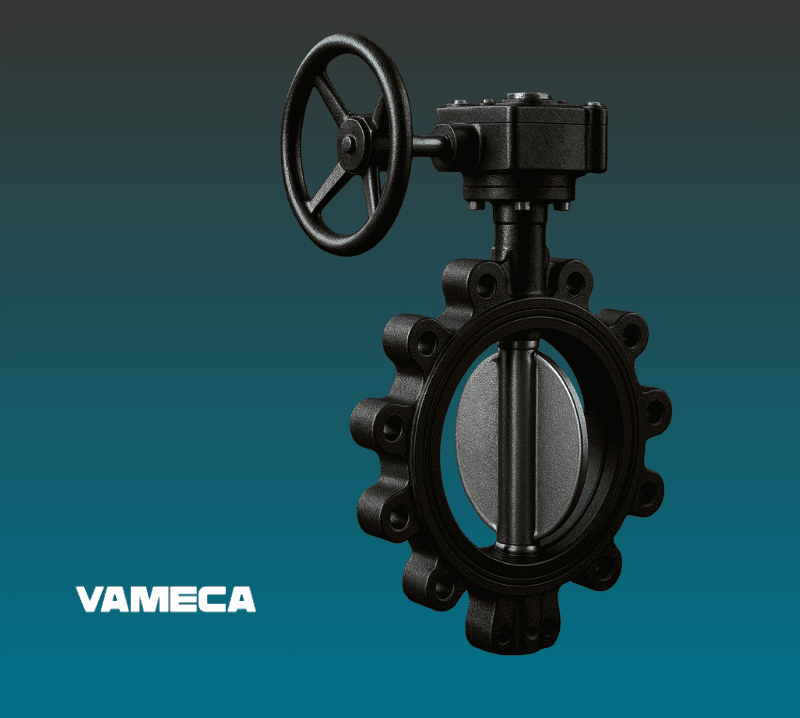
In the field of industrial valves, the butterfly valve is an essential solution. Used in diameters ranging from DN 80 to DN 3000, it effectively controls a pipeline while offering unique advantages: compactness, ease of operation, and adaptability to various environments (water, heating, industry, chemistry, etc.).
This article provides a comprehensive guide to understanding the design, materials, connections, and uses of butterfly valves, to better guide your choices in industrial projects.
What is a butterfly valve?
Also known as a butterfly valve or lined valve, the butterfly valve is part of the quarter-turn valves family. Its uniqueness lies in its disc (or disk), which rotates 90° to open or close fluid passage.
Compact and robust, the butterfly valve is particularly suited for large pipe sections. Unlike ball valves used below DN 80, it is recommended for larger diameters.
Main components of a butterfly valve
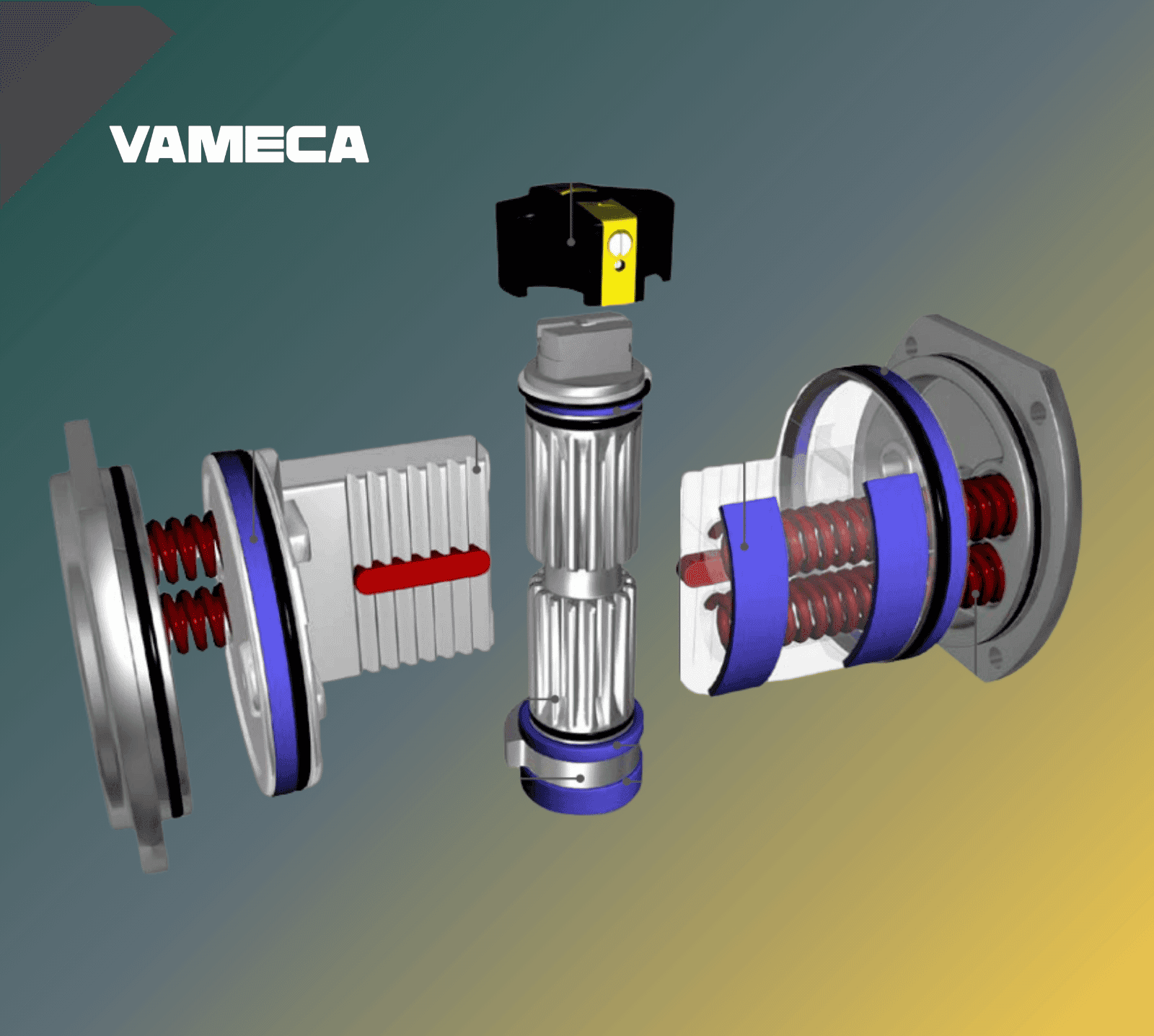
A butterfly valve consists of five essential elements:
The body – Monobloc in 90% of cases, it can also be two-part (notably for PTFE versions).
The disc (or disk) – Forged or cast, coated according to the application (epoxy, nickel, stainless steel, bronze, plastics, etc.).
The shaft – Generally stainless steel, it transmits motion and must mechanically withstand pressure.
The liner – Heart of the sealing, often elastomer (EPDM, NBR, Viton, Hypalon, Silicone) or PTFE for chemical uses.
The gasket – Secondary but essential element to prolong the valve's life.
👉 The combination of these elements determines the valve's performance, longevity, and chemical compatibility.
Different types of butterfly valves
1. Lined butterfly valves
Soft (elastomer) or rigid (PTFE) liner.
Sealing ensured directly by the liner.
Use up to PN 25.
2. Double or triple offset butterfly valves
Designed for high-performance applications.
Metal/metal seats to withstand higher temperatures and pressures.
Less used than lined valves but essential in certain industries (petrochemical, energy).
Available connections
One of the major assets of butterfly valves is the variety of their connections:
Wafer (sandwich mounting): economical, easy to install, not suitable for end-of-line.
Lug (threaded ears): allows end-of-line mounting but limited to one type of PN.
Double flange: robust, suitable for end-of-line mounting, but less versatile.
Single flange: rarer, used for specific applications.
The central role of the liner
The liner is the element that ensures the valve's seal, both inside and outside. Material choice directly depends on the fluid, temperature, and pressure:
EPDM: water, up to 130°C.
NBR/Nitrile: air, hydrocarbons, up to 90°C.
Viton/FKM: hydrocarbons and chemicals, up to 150°C.
Hypalon: chemicals, up to 130°C.
Silicone: abrasive products, up to 200°C.
PTFE: aggressive chemical applications.
👉 Note: for air circuits containing oil, using a nitrile liner is imperative.
Available actuation and controls
Like ball valves, butterfly valves have an ISO mounting pad that facilitates their actuation. Several types of controls are available:
Lever with notches (often lockable).
Manual wheel or gearbox for gradual openings.
Chain operator for overhead installations.
Pneumatic actuator.
Electric actuator.
They can also be equipped with mechanical or inductive limit switches, enhancing their integration into automated systems.
Industrial applications
Butterfly valves are used in many sectors:
Water market: large dimensions, moderate pressure, competitive pricing.
Heating: significant volumes, reduced technicality, strong competition from imported products.
Industry: technical applications, higher margins, enhanced quality requirements.
Advantages and limitations of butterfly valves
✅ Advantages:
Unmatched quality/price ratio for large diameters.
Simplicity of design and maintenance.
Adaptability to various fluids and environments.
Compatible with automation.
⚠️ Limitations:
Less suitable for small diameters (<DN 80).
Sometimes high operating torques.
Increased sensitivity to liner quality (possible wear, tearing).
Conclusion
The butterfly valve is one of the most versatile and cost-effective pieces of equipment in industrial valves. From water management to complex industrial processes, it offers a reliable, economical, and easily automatable solution.
However, the key to successful selection lies in the correct choice of materials (body, disc, liner) and the match between connection and application.
In summary, choosing the right butterfly valve secures your installations and extends their lifespan while optimizing your costs.