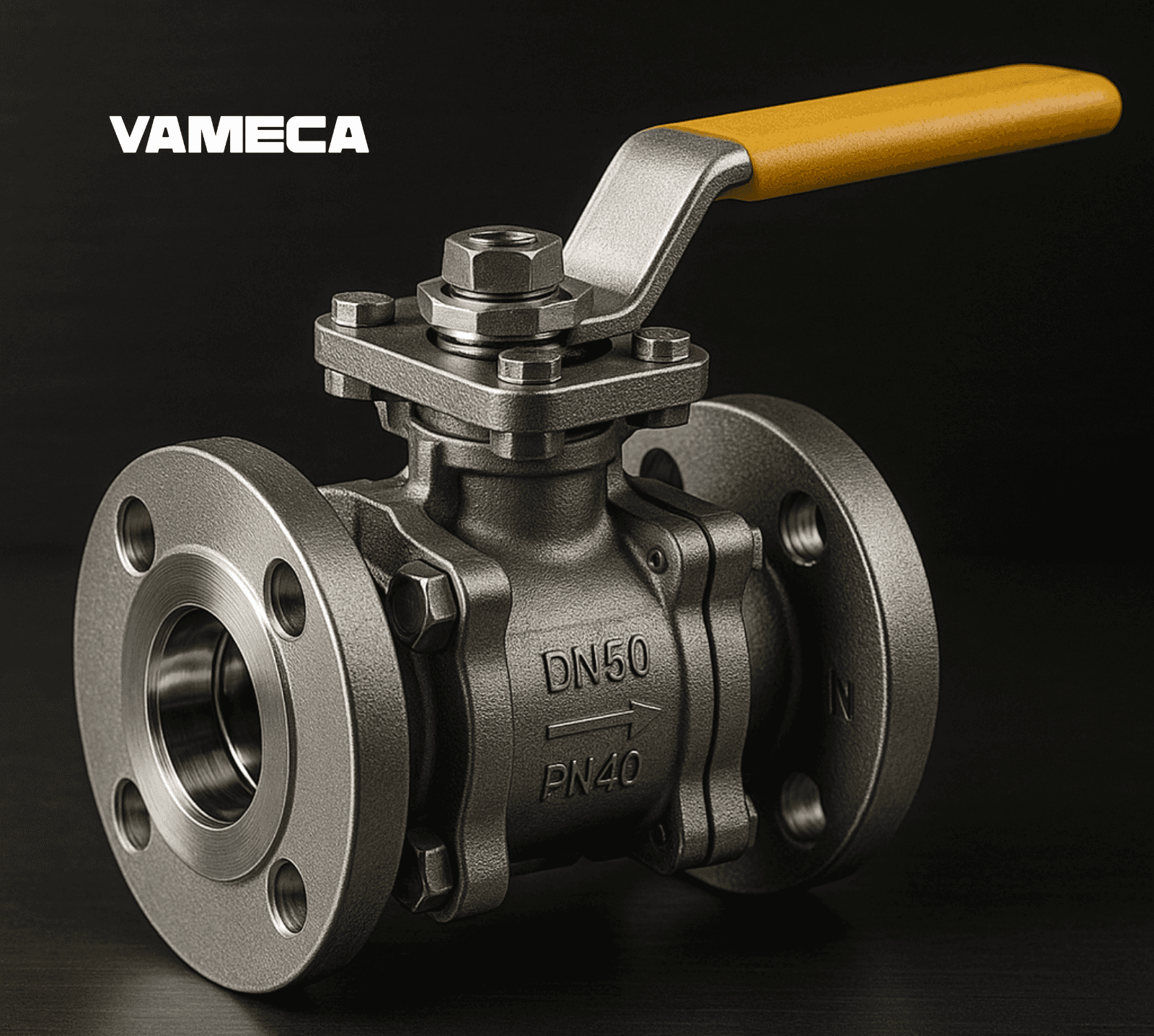
In the world of industrial valve technology, ball valves – often referred to as ball cocks – hold an essential place. Used across countless sectors (chemical, energy, petrochemical, food and beverage, pharmaceutical, etc.), they are known for their ease of operation, robustness, and ability to deliver reliable sealing, even under demanding conditions.
But how do they really work? What are the different versions, materials, and possible end connections? And above all, how do you choose the right model for your process?
This comprehensive guide gives you the key information you need to understand and select the right ball valve for your installations.
What is a ball valve?
A ball valve (BV) belongs to the family of quarter-turn valves: a simple 90° movement is enough to fully open or close the flow path.
Behind this simple mechanism is an ingenious design: a perforated sphere with an opening allows or blocks fluid flow. This design makes it a device that is:
reliable,
easy to operate,
compact,
and suitable for many industrial fluids.
Materials used: mechanics and sealing
A BV is made up of two main families of components:
Mechanical parts: body, ball, stem, and fasteners.
Common materials: carbon steel, stainless steel, brass, specific alloys (Hastelloy).
Available treatments or coatings (chroming, FEP, PFA) to resist corrosion.
Plastic versions (PP, PVC, PVDF) used in light chemical service, low temperature (10 to 90 °C), and low pressure (<10 bar).
Soft parts: packing, seals, seats.
Most common materials: PTFE (Teflon), glass-filled PTFE, graphite, stainless steel.
Their selection depends directly on the fluid, pressure, and process temperature.
👉 Key takeaway: proper material sizing determines the valve’s reliability and service life.
Floating ball or trunnion-mounted ball: what’s the difference?
The ball is the central element of the valve. Two main designs are used:
Floating ball
It is not fixed to the stem.
Sealing is provided by fluid pressure, which forces the ball against the downstream seat.
Advantage: excellent sealing, even at high pressure.
Use: small to medium diameters.
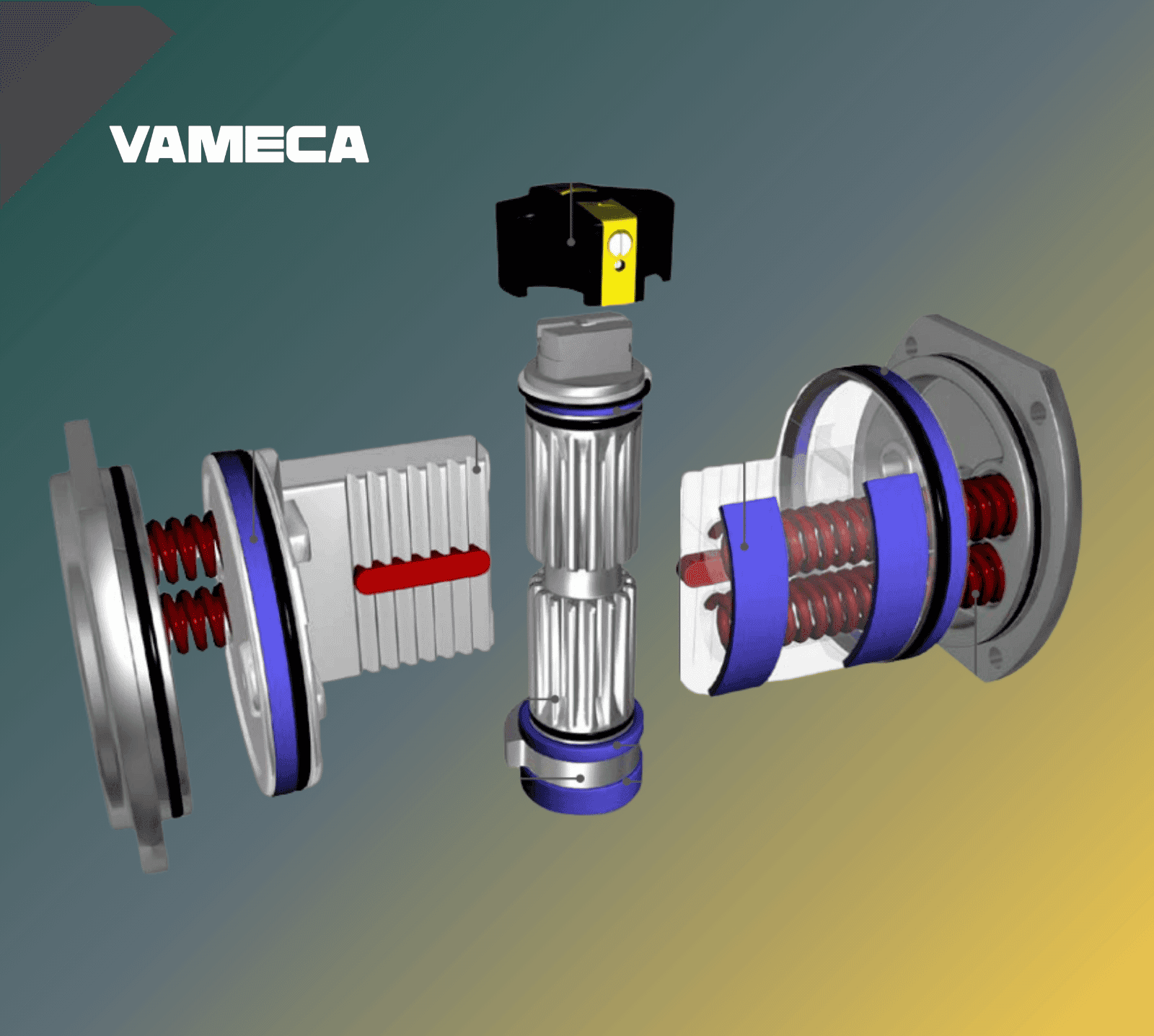
Trunnion-mounted ball
Fixed to the stem, it is supported by bearings.
Sealing is provided by springs that keep the seats in contact.
Advantage: lower operating torque, better suited to large diameters and high pressures.
👉 Good to know: the choice between floating and trunnion-mounted depends on the DN, pressure, and service conditions.
Sealing elements: seats, seals, and packing
Packing and body seals: provide external sealing to protect the operator and prevent any leakage to the environment.
Seats: ensure in-line internal sealing. Their design directly affects operating torque and pressure resistance.
Materials: PTFE, graphite, filled PTFE, depending on service conditions.
👉 The packing is generally the most sensitive component: its selection is critical to safety and reliability.
Available end connections
A key factor when selecting a BV is the end connection type. Here are the main options:
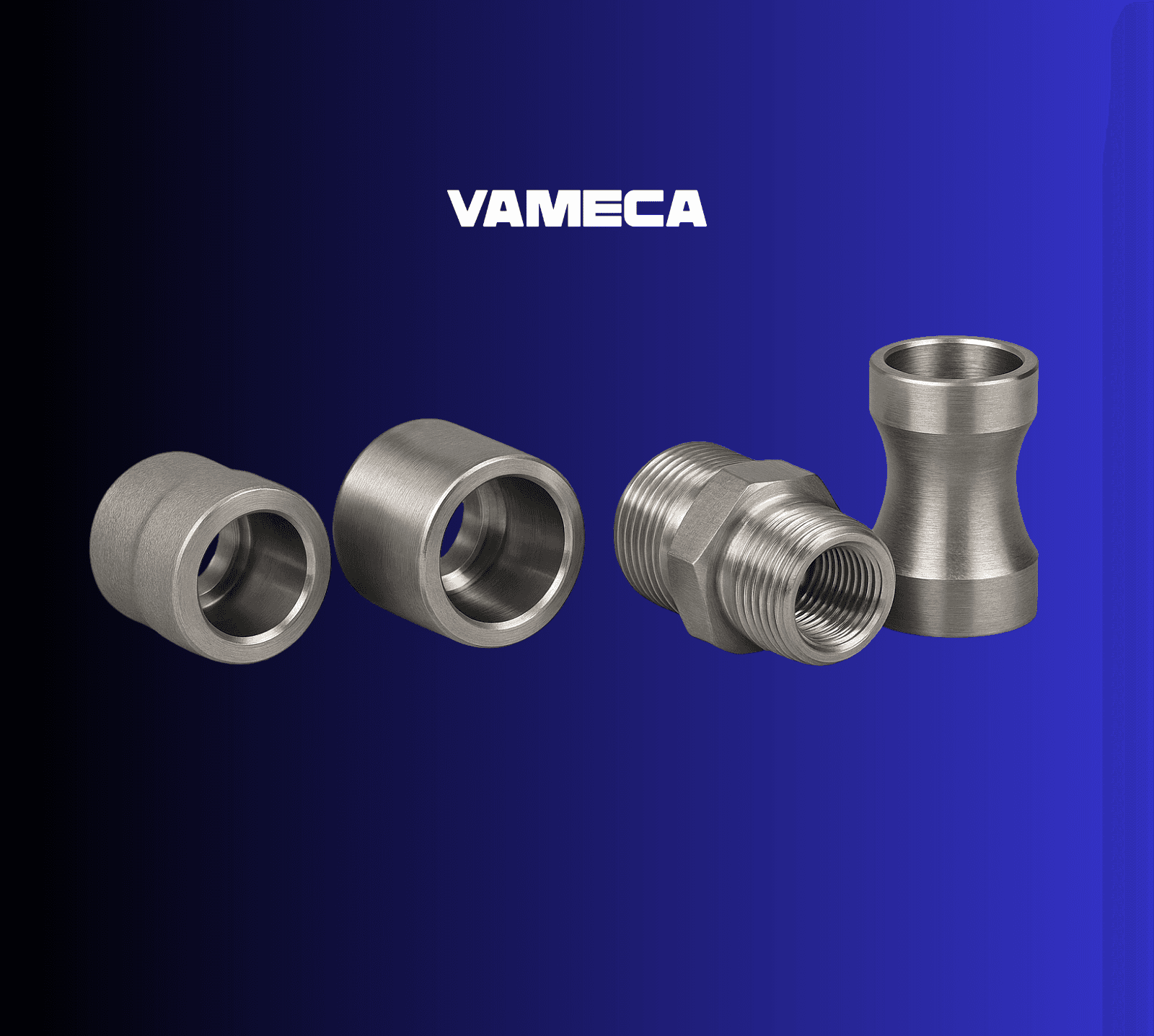
Welded (SW or BW) → common in process applications, requires matching the standard (ISO, DIN, SMS).
Threaded (BSP or NPT) → typical in small sizes, often used in oil and gas.
Flanged → DIN, ISO (PN10, PN16, PN25, PN40) or ASA (150, 300) standards depending on the industry.
Clamp → used in pharmaceutical applications, but limited in heavy-duty process service.
Special threaded → specific cases (e.g. Michelin with M25x150 or M36x200).
👉 Each connection type addresses specific installation and maintenance constraints. Always verify compatibility with the existing network.
Full bore vs reduced bore
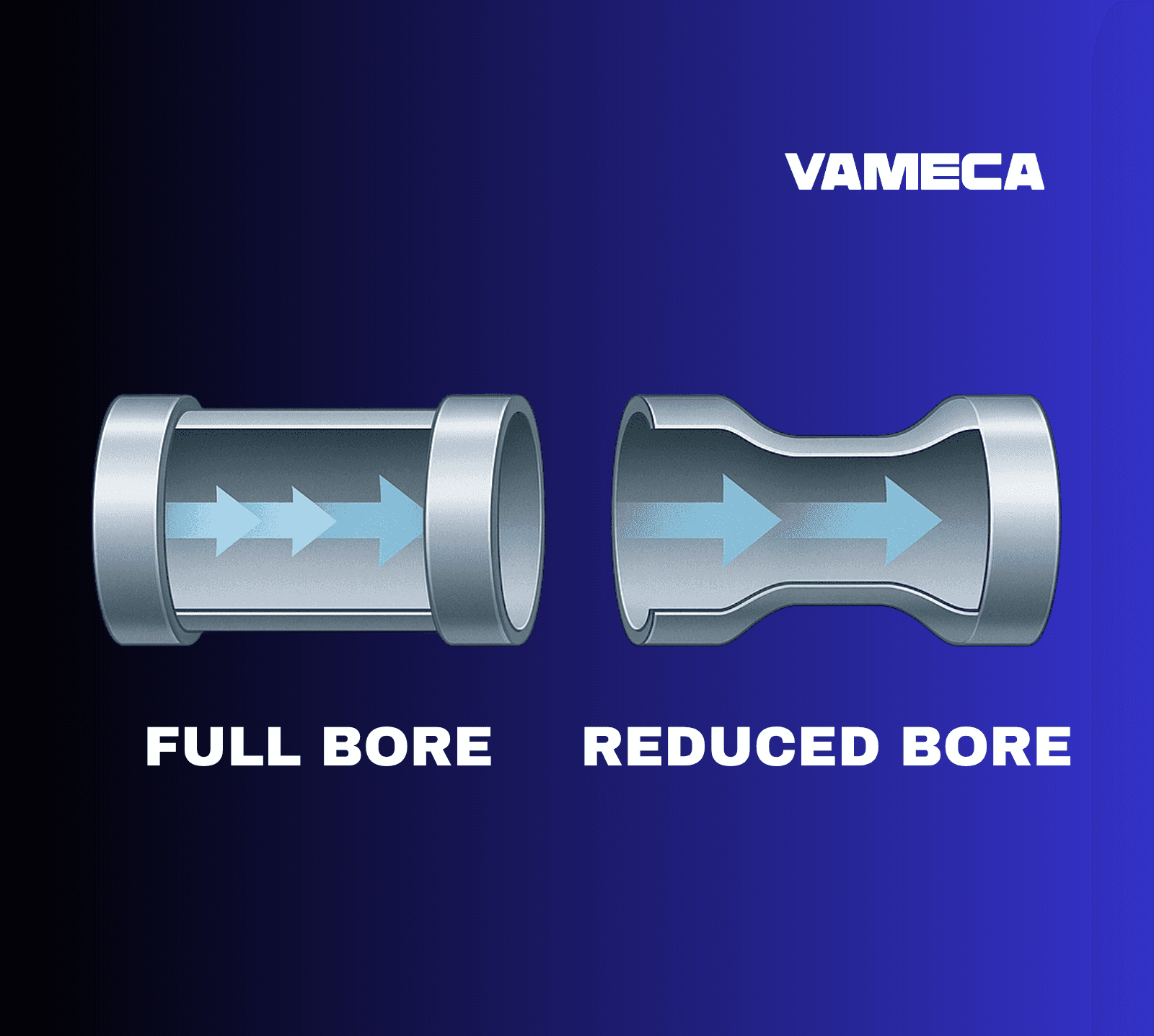
Two flow passage types are available:
Full bore: constant nominal diameter, promotes maximum flow.
Reduced bore (venturi): smaller internal diameter by one size → helps reduce valve cost and lower the required torque (and therefore actuator size).
👉 Strategic choice: full bore to minimise pressure drop, venturi to optimise budget and actuation.
Automation and ISO mounting pad
BVs can be automated thanks to a standardised ISO mounting pad. This defines the mounting dimensions, but not the stem height – a point that must be validated case by case.
Common sizes: F03, F04, F05, F07, F10.
👉 Tip: always ask the customer whether future automation is being considered, even if the valve is supplied manual. This avoids costly replacements later on.
Variants and available ranges
The BV offering is extensive:
Supplier selection depends on your budget, the required standards, and the expected level of technical sophistication.
3-way and 4-way ball valves
Multiport versions (L, T, and even 4-way) allow you to switch or mix fluids.
Essential questions to ask:
Must the valve be leak-tight on all ports?
What is the position of the common port?
👉 Note: depending on the manufacturer, seat design differs (with or without a seat on the third port).
Conclusion
The ball valve is far more than a simple on/off valve: it is a central component in any industrial network. Its selection must take into account:
the fluid,
temperature,
pressure,
end connection type,
any future need for automation,
and budget constraints.
A poor choice can create hidden costs (maintenance, replacement, non-compliance), whereas the right selection helps secure your installations over the long term.