A poorly maintained valve costs far more than a poorly specified valve. Unplanned shutdowns, fugitive emissions, and emergency replacements generate direct and indirect costs that are often underestimated. Yet the vast majority of industrial valve failures are predictable — and preventable — with an appropriate maintenance strategy.
1. The three most common failures in Canadian industry
Before discussing interventions, you need to understand what is failing. In the field, three types of failures account for the majority of interventions on industrial valve fleets.
Failure 1 — Stem leak (packing)
Symptom: seepage or visible leakage around the valve stem.
Cause: wear or hardening of the sealing packing, excessive operating cycles, aggressive fluid, or elevated temperature.
Consequence if left untreated: environmental contamination, regulatory non-compliance, safety risk with hazardous fluids.
Intervention: replacement of the packing kit — an operation that can often be performed without removing the valve.
Failure 2 — In-line leakage (worn seat)
Symptom: the valve no longer shuts off completely in the closed position — residual fluid flow.
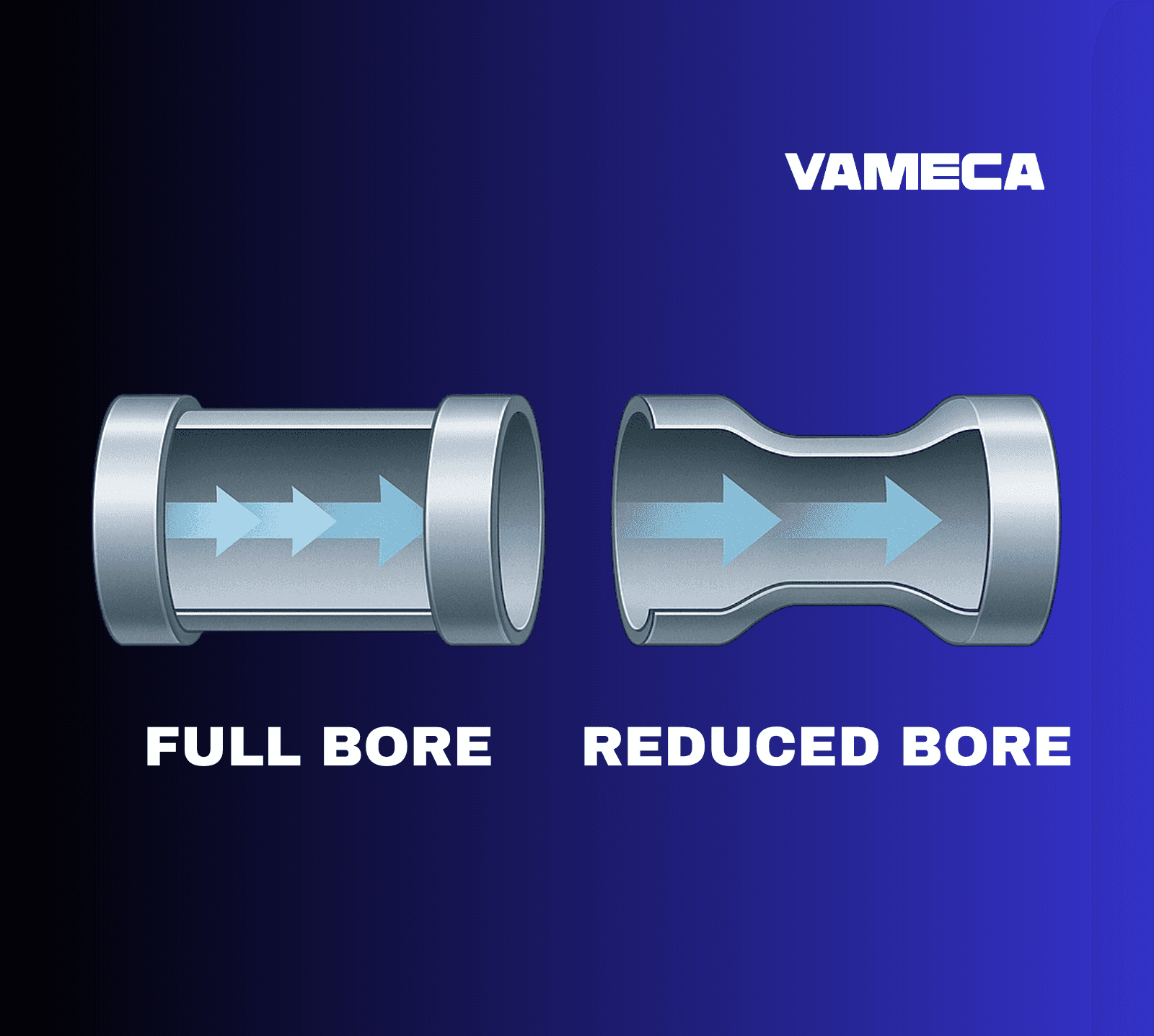
Cause: seat erosion from abrasive or solids-laden fluids, repeated water hammer, incorrect bore selection (standard or reduced).
Consequence if left untreated: production losses, cross-contamination, inability to isolate a section for maintenance.
Intervention: replacement of the seat kit or the complete valve depending on the degree of wear.
Failure 3 — Abnormal operating torque
Symptom: the valve no longer opens or closes properly — binding, difficult operation, actuator overload.
Cause: deposits or scaling on the closure element, stem corrosion, incorrect actuator sizing, insufficient or contaminated compressed air on a pneumatic unit. 🔗 Link on "pneumatic actuator" → /all/types-actionneurs-pneumatiques-industrie
Consequence if left untreated: actuator failure, valve stuck in position — production shutdown.
Intervention: cleaning and lubrication, verification of air supply, recalibration or replacement of the actuator.
2. Preventive maintenance: plan before failure
Preventive maintenance consists of intervening on a fixed schedule, regardless of the apparent condition of the equipment. It is particularly well suited to critical valves whose failure would have a major impact on production or safety.
Valve type | Recommended inspection frequency | Items to check |
|---|---|---|
On/off isolation valve | Annual for standard circuits | Stem sealing, operating torque, condition of the lever or actuator, no external corrosion |
Control valve | Semi-annual to quarterly depending on cycle frequency | Positioning accuracy, positioner drift, seat condition, smart positioner diagnostics |
Safety valve / relief valve | Minimum annual — often dictated by provincial regulation | Set pressure, leak-tightness in closed position, trip test, current CRN certification |
Valve on steam systems | Before each heating season + annual inspection | Traps, condensate, high-temperature sealing, condition of graphite packing |
Check valve | Annual | Free movement of the disc, no deposits, leak-tightness in closed position |
✅ Best practices: document each intervention in a maintenance log by valve tag. In the event of a regulatory inspection (CSA B51, RBQ, ABSA), this log is the first document requested.
3. Predictive maintenance: anticipate with data
Predictive maintenance relies on continuous monitoring of measurable parameters — vibration, torque, temperature, position — to detect drift before it becomes a failure. It is the shift from a calendar-based logic to one based on the actual condition of the equipment.
On modern industrial valves equipped with smart positioners, several indicators are available in real time:
Position drift: the valve no longer returns exactly to the setpoint — a sign of mechanical wear or contamination
Increase in operating torque: an early indicator of scaling or seal degradation
Cycle counting: each valve type has a cycle life — exceeding the threshold without inspection increases the risk of failure
Travel signature: the torque/position curve reveals anomalies invisible to the naked eye (stem deformation, asymmetric seat wear)
These data are fed into SCADA or DCS systems, enabling maintenance teams to prioritize interventions based on real risk rather than a fixed schedule. This is one of the pillars of smart valve technology.
4. Essential maintenance kits to keep in stock
An unplanned production shutdown often costs 10 to 100 times the price of a maintenance kit. Having the right consumables in local stock is an economic decision as much as a technical one.
Kit | Components included | For which valve type |
|---|---|---|
Packing kit | Braided packing or graphite/PTFE rings, backup washers, fasteners | All valves with a stem (ball valve, globe valve, gate valve) |
Seat and seal kit | PTFE or metal seats, O-rings, diaphragm depending on the model | Ball valves, butterfly valves (liner), globe valves |
Sleeve kit | Elastomer sleeve (EPDM, NBR, Viton) depending on the fluid | Butterfly valves — primary wear part 🔗 Link → /all/vannes-papillon-fonctionnement-materiaux-applications |
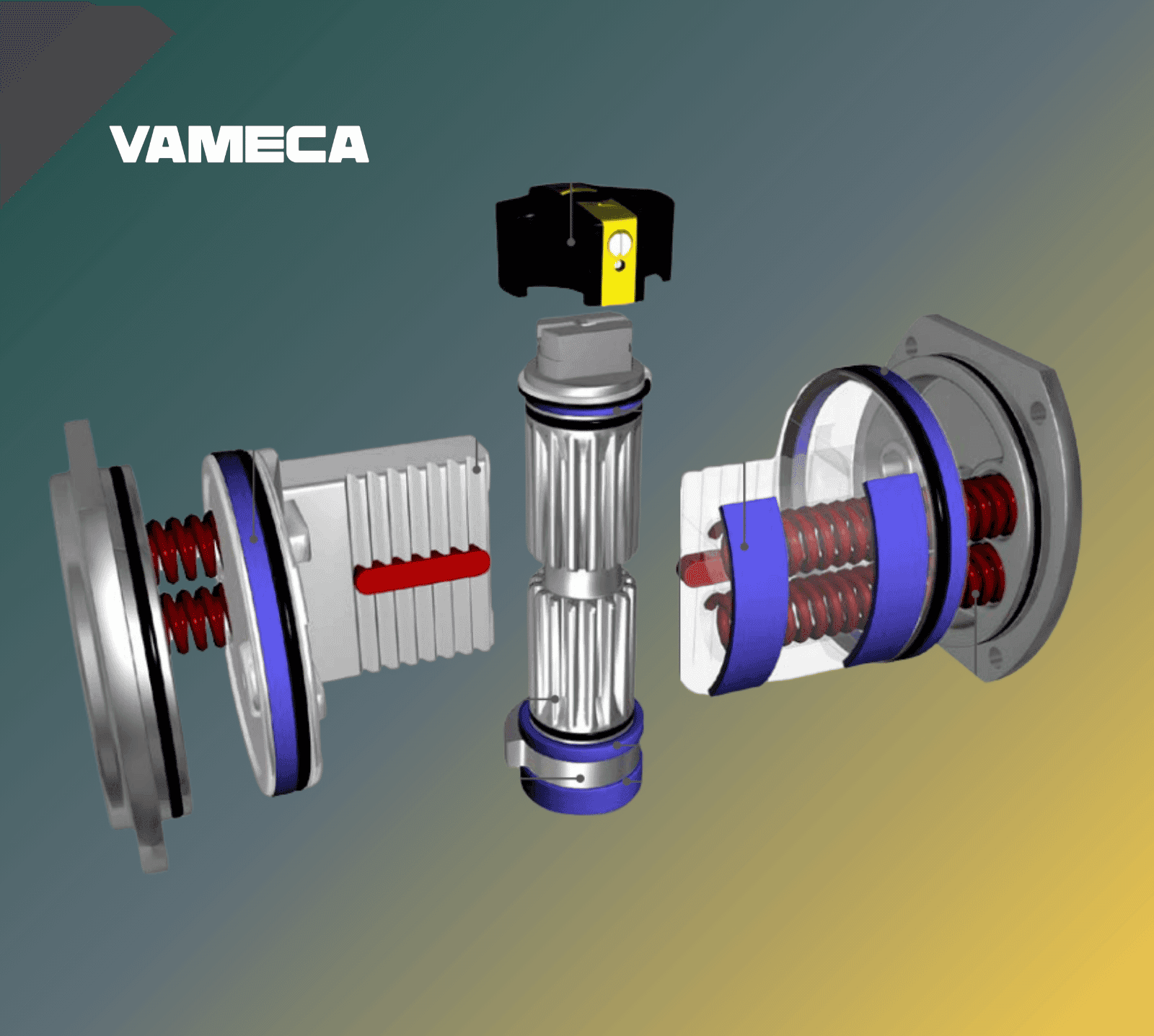
Pneumatic actuator kit | Piston seals, return spring, shaft seals, lubricants | Single- and double-acting pneumatic actuators |
Flange gasket kit | Flat, spiral-wound, or RTJ gaskets according to pressure class | All flanged valves — replace systematically during disassembly |
⚠ Absolute rule: a flange gasket that has been removed is never reused. Even if it appears visually intact, its structure has been compressed and no longer guarantees sealing upon reassembly. Always have a new gasket on hand before any flange work.
5. Impact of connection type on maintainability
The connection selected during installation directly affects the ease and cost of future interventions. It is a criterion often overlooked at the design stage, but one that becomes costly in maintenance.
Flanged connection: quick disassembly, easy access to internal components, valve replacement without cutting piping. The best option for valves on lines requiring regular intervention.
Threaded connection: disassembly possible, but risk of thread damage at every intervention. Limited to small diameters on non-critical circuits.
Welded connection: complex maintenance — requires cutting and rewelding the piping. Reserved for high-pressure/high-temperature circuits where absolute leak-tightness outweighs maintainability.
Clamp / tri-clamp connection: fastest disassembly — tool-free in a few seconds. Ideal for food and beverage or pharmaceutical lines requiring frequent cleaning.
6. Regulatory compliance during interventions
In Canada, replacing or repairing pressure equipment is not a trivial act from a regulatory standpoint. The CSA B51 code governs not only design and installation, but also maintenance operations on registered equipment.
What you need to know before starting work
Replacement in kind: replacing a CRN valve with an identical model from the same manufacturer generally does not require new certification, provided the same CRN number and the same province of use are maintained.
Change of model or manufacturer: if the replacement valve differs from the original model (materials, pressure class, manufacturer), a new provincial CRN may be required depending on the province and operating pressure.
Weld repair: any repair involving welding on pressure equipment must be performed by a certified welder and may require inspection by an accredited body (ABSA in Alberta, RBQ in Quebec, TSSA in Ontario).
Documentation: keep material certificates (MTRs), inspection reports, and intervention records in the facility log.
⛔ Attention: a valve replaced without CRN compliance in a Canadian province can void the facility insurance and expose the operator to regulatory penalties. When in doubt, consult the relevant provincial authority before proceeding.
7. Building an effective maintenance program
A structured maintenance program for an industrial valve fleet rests on four pillars:
Complete inventory: each valve is identified by a unique tag with its characteristics (type, DN, PN/Class, fluid, manufacturer, CRN number). Without a reliable inventory, there is no reliable maintenance.
Criticality: not all valves deserve the same level of attention. Classifying valves by criticality level (production impact, safety, environmental impact) makes it possible to prioritize resources.
Intervention plan: for each criticality level, define the inspection frequency, type of intervention (visual, functional, disassembly), and spare parts to keep in stock.
Feedback loop: document each intervention and analyse recurring failure causes. This is the basis for improving the specifications of future equipment.
✅ Towards predictive maintenance: valves equipped with smart positioners make it possible to automate part of this program by sending condition data directly to the monitoring system. An initial investment that pays back quickly on sites with large fleets of automated valves.
In summary
Maintenance of industrial valves is not a reactive activity — it is a strategy. Industrial sites that achieve the best results in terms of uptime and maintenance costs share the same best practices:
An up-to-date inventory with each valve's specifications
Critical spare kits available in local stock
Inspection intervals based on criticality and operating conditions
Systematic documentation of interventions
CSA B51 compliance maintained with each replacement
At VAMECA, we support maintenance teams in building their spare parts inventory, selecting the right kits for their valve fleet, and ensuring regulatory compliance during replacements.